
Stiff gentian
Gentianella quinquefolia
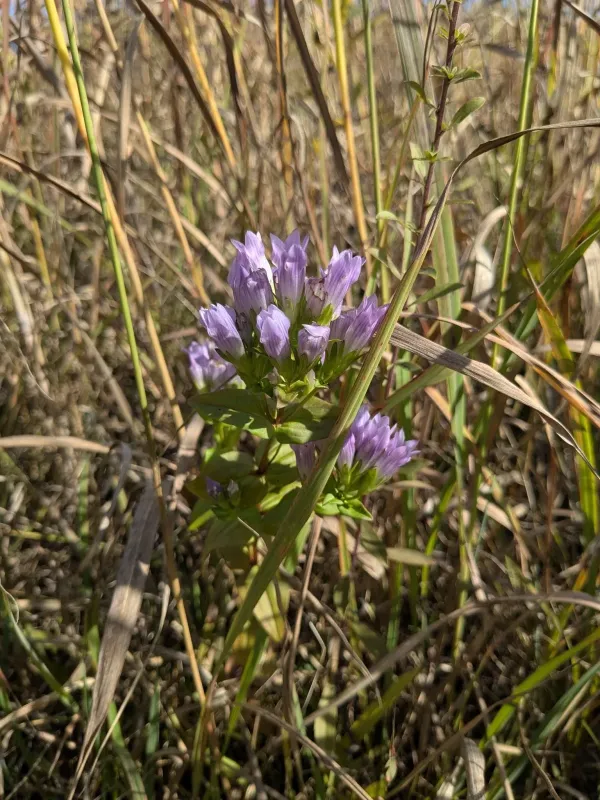
Description
Sowing dates
Stiff gentian is typically a biennial plant that requires specific dormancy-breaking treatments to achieve successful germination. Seeds are extremely small and contain physiological inhibitors that necessitate a cold stratification period of at least 60 to 90 days.
For large-scale cultivation, sowing should be conducted in late autumn to allow the seeds to overwinter outdoors, naturally fulfilling their stratification requirements. This timing ensures that germination occurs as soon as the soil temperatures rise in early spring.
When starting indoors, seeds must be sown on the surface of a fine-textured, moisture-retentive germination mix. Since the seeds are light-dependent for germination, they should never be covered with soil, but rather pressed gently into the medium to ensure good seed-to-soil contact.
Consistency in moisture is vital during the germination phase. The soil should be kept uniformly damp but not waterlogged, as excess water can cause the seeds to rot before they have a chance to develop radicles.
Once seedlings emerge, they should be moved to a location with bright, indirect light. Developing a strong root system during the first year is the main goal for a healthy plant, which will then focus its energy on flowering in the subsequent season.
Growing requirements
Gentianella quinquefolia thrives in habitats that mimic its native North American environment, typically found in moist meadows and forest edges. To succeed in agriculture, it requires a well-structured soil profile with excellent aeration.
The ideal soil type is a loamy, organic-rich medium that maintains moisture while facilitating drainage. Extremely heavy clay soils should be amended with organic matter or sand to improve porosity and prevent root suffocation.
While the plant requires sufficient sunlight for vigorous development, it is susceptible to heat stress. In regions with high summer temperatures, partial afternoon shade is essential to maintain plant turgor and prevent premature wilting.
The optimal pH range for this species is slightly acidic to neutral. Periodic monitoring of nutrient levels is recommended, although the plant does not require heavy fertilization; excessive nitrogen can promote succulent, disease-prone growth.
Water management is the most critical agronomic factor. Irrigation systems should be set to provide regular, light watering, mimicking natural precipitation patterns, which helps maintain the microclimate humidity the plants prefer.
Main diseases and pests
Fungal pathogens are the primary threat to the health of stiff gentian crops. Excessive humidity and poor airflow around the foliage can lead to the rapid development of leaf spot diseases and crown rot, which can decimate a stand.
Root rot, driven by stagnant water or pathogens in the soil, is frequently reported in poorly managed fields. Ensuring proper drainage is the most effective preventative measure against these soil-borne organisms.
Gastropods, particularly slugs and snails, are notorious pests for this species, as they can consume young seedlings overnight. Integrated pest management strategies, such as physical barriers and attracting natural predators, are preferred over chemical applications.
Aphids can infest the plant during the floral initiation stage, causing distortion and potentially transmitting viral diseases. Early detection through regular crop scouting allows for the application of targeted, low-impact control measures.
Maintaining a clean, weed-free field is necessary not only for competition reduction but also to prevent the buildup of pests and diseases that often harbor in spontaneous vegetation surrounding the crop.