
Field gentian
Gentianella campestris
Description
Growing requirements
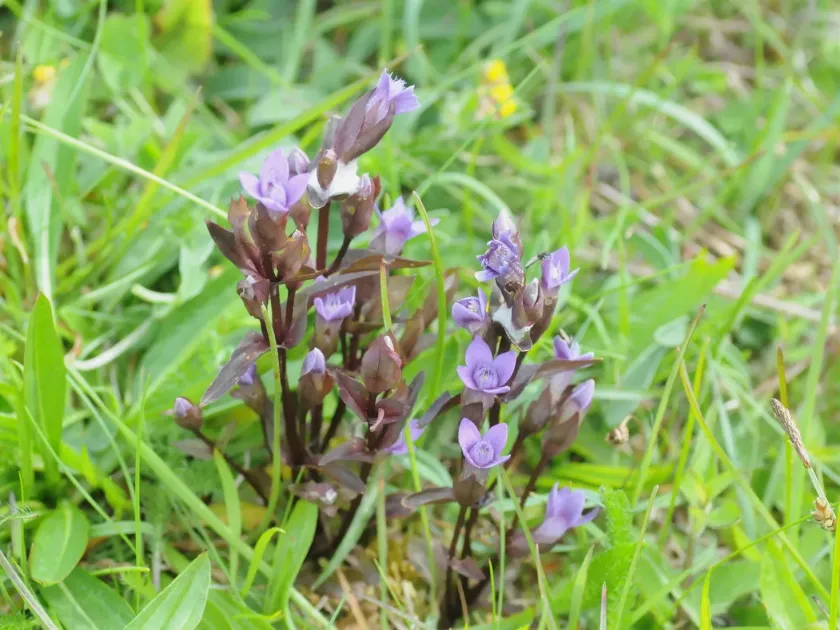
Field gentian (Gentianella campestris) is a biennial or annual herbaceous plant from the Gentianaceae family. It typically originates from open, nutrient-poor grasslands, meadows, and hillsides across Northern and Central Europe.
The plant is characterized by a simple or branched stem, paired lanceolate leaves, and distinct, bell-shaped flowers. Its lifecycle is highly adapted to the specific conditions of mountain meadows and low-productivity soils.
The plant requires well-drained, slightly alkaline, and nutrient-deficient soils to thrive. It is notably intolerant to high nitrogen levels, which can inhibit its development and natural symbiotic relationships with soil fungi.
Climatic requirements involve cool to moderate temperatures and plenty of sunlight. Field gentian is a heliophilous species, meaning it performs poorly in shaded environments or in dense, competing vegetation.
Economically, it is mainly valued in pharmacology for its intense bitter compounds, which stimulate digestive enzymes. It is also a species of conservation interest due to its specific habitat requirements in alpine ecosystems.
Main diseases and pests
The primary threats include fungal diseases caused by poor drainage and waterlogged soil conditions. Root rot is a significant risk factor during the early stages of the plant's development.
Pests such as aphids and specific leaf-feeding larvae may occasionally cause damage. However, the bitter glycosides within the plant's tissues act as a natural deterrent against many generalist herbivores.
Habitat loss due to intensive agricultural practices, such as excessive fertilization and overgrazing, has led to a significant decline in its natural population density over recent decades.
Competition from taller, more aggressive grasses is a major threat in disturbed habitats. Without proper vegetation management, field gentian is often outcompeted and removed from the floral community.
Climatic instability, particularly periods of extreme spring rainfall followed by drought, can disrupt the plant's delicate life cycle, leading to reduced germination rates and failed seed dispersal.