
Gentianella nana
Gentianella nana
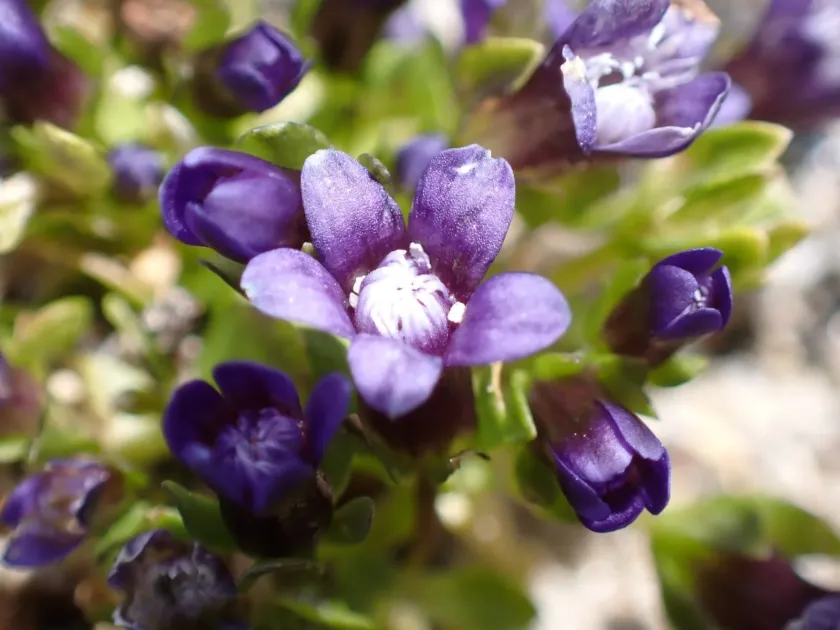
Description
Sowing dates
Gentianella nana is a specialized high-altitude species that is not cultivated as a commercial agricultural crop. Its life cycle is strictly adapted to the short growing seasons of alpine regions.
For scientific or horticultural purposes, seeds require a period of cold stratification to break dormancy. Sowing should be performed in late autumn, allowing the seeds to undergo natural winter cycles before germinating.
The seeds are exceptionally small and should be sown on the surface of a grit-based substrate. Pressing them lightly into the surface ensures the necessary contact with moisture without burying them too deeply.
Germination success is heavily dependent on seed viability, which decreases rapidly after harvesting. Fresh seed is essential for successful propagation in controlled environments.
The early growth phase is slow, with the plant forming a small rosette. Successive development requires stable environmental conditions and minimal interference from surrounding vegetation.
Growing requirements
Belonging to the Gentianaceae family, this species thrives in environments characterized by poor, rocky soils and cold temperatures. It is uniquely adapted to high-altitude ecosystems where nutrient availability is limited.
Full solar exposure is necessary for the plant to maintain its compact, characteristic growth habit. Insufficient light results in etiolation and weakens the plant's structural integrity.
The ideal soil substrate must be highly porous to ensure efficient drainage. Any water accumulation around the roots is detrimental and often leads to rapid decay of the root system.
Temperatures should remain relatively cool throughout the growing season. Excessive heat or humidity acts as a stressor that significantly increases the plant's susceptibility to pathogens.
It is sensitive to soil chemistry and should not be treated with standard commercial fertilizers. The natural balance of minerals in a rocky substrate is sufficient for its slow metabolic requirements.
Main diseases and pests
The primary threats to Gentianella nana include environmental instability, such as climate change, which disrupts the delicate alpine ecosystems it depends upon for survival.
Fungal pathogens represent the most significant horticultural threat. High humidity combined with poor airflow quickly fosters infections that can lead to root rot and total loss.
Gastropod pests, specifically slugs and snails, cause physical damage by grazing on the succulent leaves and developing flower buds during the moist periods of the year.
Competition from invasive or more aggressive grass species in the event of nitrogen enrichment is a major factor in the decline of wild populations of this dwarf gentian.
Preventative measures focus on mimicking natural drainage conditions and ensuring that no stagnant water remains near the crown of the plant during periods of high precipitation.