
Tahitian gardenia
Gardenia taitensis
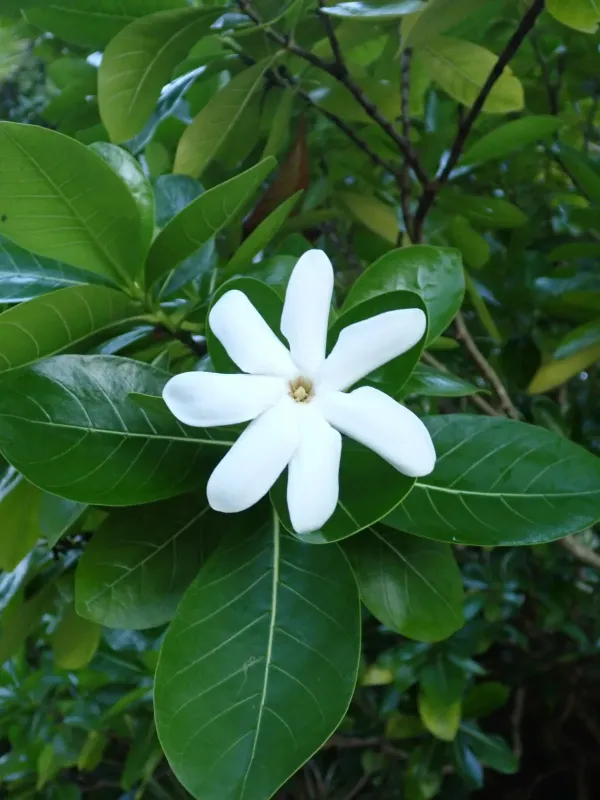
Description
Growing requirements
Tahitian gardenia (Gardenia taitensis), widely known as the Tiare flower, is a distinctive evergreen shrub belonging to the Rubiaceae family. Originating from the South Pacific islands, it is a hallmark of Polynesian flora.
The plant thrives in tropical climates, requiring consistent temperatures between 22°C and 28°C. It is highly sensitive to cold and does not tolerate freezing temperatures, making it unsuitable for open-field cultivation in temperate regions.
Cultivation requires acidic soil (pH 5.0–6.0) with excellent drainage. Gardenias are extremely sensitive to waterlogged conditions, which can lead to rapid root decay, thus requiring careful soil management and aeration.
While mature plants can tolerate bright light, they prefer partial shade, especially in the hottest parts of the day, to avoid leaf scorching and maintain the deep, glossy green appearance of the foliage.
Agronomic management involves regular application of balanced fertilizers, paying close attention to micronutrient levels, as the plant is prone to chlorosis when soil chemistry is not perfectly balanced.
Main diseases and pests
The main pests affecting Tahitian gardenia include spider mites and mealybugs, which thrive in environments with low humidity or poor airflow around the foliage.
Root rot is the most common disease associated with poor drainage, often exacerbated by over-irrigation. It manifests as a rapid decline in plant health and requires immediate adjustment of the watering regime.
Nutrient deficiencies, particularly iron chlorosis, are common issues in suboptimal soil pH conditions. This leads to yellowing leaves and reduced photosynthetic efficiency, impacting the overall yield of the flowers.
Integrated pest management is recommended, focusing on maintaining plant vigor through proper nutrition and sanitation, which naturally reduces the susceptibility of the shrub to common infections.
Early detection and the removal of affected branches are crucial to preventing the spread of diseases and pests throughout the planting area, ensuring the long-term sustainability of the gardenia farm.
Harvesting
The primary agricultural use of Gardenia taitensis is for the commercial harvesting of its fragrant white flowers, which are the main ingredient in the production of Monoi de Tahiti oil.
Flowers are hand-picked at dawn while they are still in the budding or semi-open stage, as this ensures the highest content of aromatic essential oils before they dissipate in the heat of the day.
The post-harvest process involves maceration, where the flower petals are soaked in refined coconut oil for several weeks to infuse the oil with the characteristic scent and properties of the Tiare.
Under optimal conditions, the plant is a prolific producer, allowing for frequent harvest cycles. Proper pruning is essential to encourage new growth and maintain the health and vigor of the shrubs for long-term production.
This high-value niche crop supports local economies in Pacific island regions, where the traditional knowledge of handling and processing the flowers is passed down through generations.