
Fumana laevis
Fumana laevis
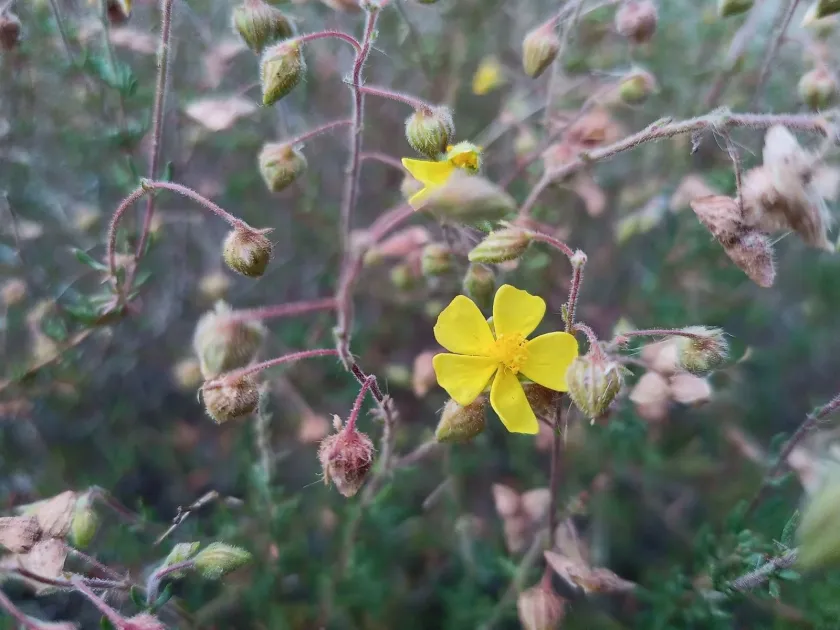
Description
Sowing dates
Fumana laevis is an evergreen subshrub belonging to the Cistaceae family, naturally found in Mediterranean-type ecosystems, and primarily propagated by seeds.
For optimal germination, seeds should be sown in late autumn, allowing them to undergo a natural cold stratification process throughout the winter months.
If sowing is performed in the spring, seeds require artificial stratification at low temperatures for 4 to 6 weeks to break dormancy and ensure uniform sprouting.
The seeds are relatively small, so they should be sown on the surface of a light, well-draining mineral substrate without deep burial to allow light access.
Container cultivation is recommended for the initial stages to ensure precise control over moisture levels and protect young seedlings from extreme weather conditions.
Growing requirements
As a heliophilous species, Fumana laevis thrives in full sun, requiring exposure to direct sunlight for the majority of the day to maintain its compact growth habit.
The ideal growing medium is poor, rocky, or sandy soil with a neutral to alkaline pH, which perfectly mimics the plant's native limestone-rich environment.
Exceptional drought tolerance is one of the key characteristics of this plant, making it highly suitable for xeriscaping and sustainable garden design in arid climates.
Good soil drainage is non-negotiable; waterlogging will cause immediate root distress and lead to the decline of the plant within a very short period.
This species is highly adapted to low-nutrient soils and generally does not require additional fertilization, as over-fertilization can promote weak, lanky stems.
Main diseases and pests
The most common threat to Fumana laevis in a garden setting is root rot, triggered by heavy soils that retain too much moisture during dormant winter months.
Fungal pathogens, particularly those causing leaf spot or powdery mildew, can emerge if the plant is situated in areas with stagnant air and high humidity levels.
Insects like aphids may occasionally colonize the tender growth, causing distortion and potentially introducing viral diseases to the shrub.
To mitigate the risk of disease, it is essential to provide adequate spacing between plants to facilitate airflow and keep the foliage dry.
Monitoring the soil moisture content is critical; the plant prefers to dry out significantly between watering sessions to remain healthy and resilient.