
Arabian fumana
Fumana arabica
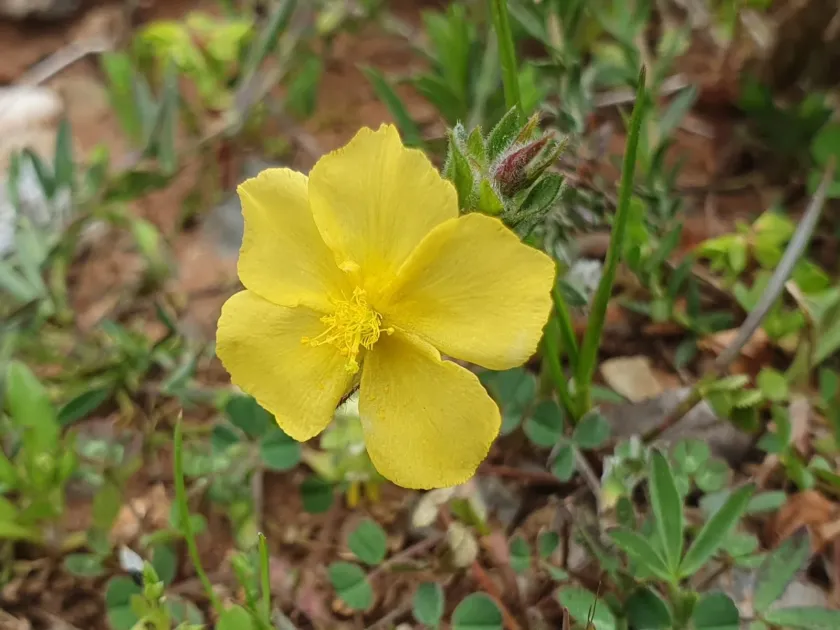
Description
Growing requirements
Arabian fumana (Fumana arabica) is a perennial subshrub belonging to the Cistaceae family. It is a highly specialized plant native to the Mediterranean region, typically found on arid, rocky slopes and calcareous soils where moisture is frequently limited.
Botanically, this species is defined by its low-growing, woody stems and small, narrow leaves. It has evolved unique physiological adaptations to survive in harsh xeric environments, including reduced leaf surface area and a deep, extensive root system that efficiently extracts moisture.
To cultivate Fumana arabica successfully, growers must replicate its natural habitat. It requires extremely well-drained, sandy, or rocky soil with a neutral to alkaline pH. Heavy, water-retentive soils are detrimental, as the plant is highly susceptible to root diseases when exposed to stagnant water.
The plant thrives in full sun and requires significant solar radiation to maintain its compact growth form and initiate flowering. It is not cold-hardy, so in climates with severe winters, it may require protection or cultivation in controlled conditions such as rock gardens or slopes with excellent drainage.
In landscaping, this species is prized for its drought tolerance and low maintenance. It is commonly used in rock gardens, dry slopes, and xeriscaping projects. Its ability to thrive in nutrient-poor soils makes it an excellent choice for sustainable, low-water garden design.
Main diseases and pests
The primary threats to Arabian fumana are fungal pathogens, specifically those causing root rot. Excessive soil moisture or high humidity levels during the growing season create an environment where soil-borne pathogens can easily devastate the root system, leading to sudden wilting and plant death.
Common pests include spider mites and aphids, which can infest the plant during prolonged dry spells. While the plant is inherently robust, heavy pest pressure can weaken its structural integrity, making it more vulnerable to secondary infections or environmental stress.