
Fumana ericoides
Fumana ericoides
Description
Growing requirements
Fumana ericoides, belonging to the Cistaceae family, is a perennial evergreen subshrub native to the Mediterranean region. It is well-adapted to rocky, calcareous slopes and thrives in environments where most typical agricultural crops would fail due to water deficiency.
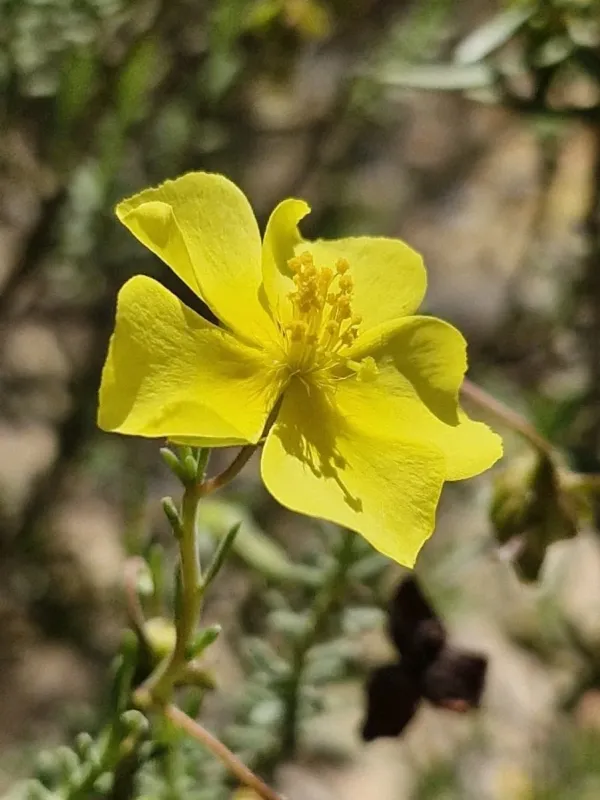
The botanical structure of this species is characterized by its heath-like appearance, with dense, narrow leaves covering slender stems. During the flowering season, the shrub produces prominent yellow, five-petaled flowers that provide significant ornamental value to arid landscapes.
The cultivation of Fumana ericoides requires full sun exposure and exceptional drainage. It is a true xerophyte, meaning it is highly sensitive to waterlogged soils, which can cause rapid root rot and systemic decline of the plant specimen.
Soil requirements involve a preference for light, stony, or sandy substrates with neutral to slightly alkaline pH levels. Agrotechnical management should focus on preventing soil compaction to ensure oxygen availability to the roots, which is crucial for sustained plant health and vigor.
Economically and horticulturally, this plant is primarily utilized in landscaping and xeriscaping. It is highly valued for covering dry embankments, rocky gardens, and areas with minimal soil nutrition, acting as an effective stabilizer and decorative cover for challenging terrain.
Main diseases and pests
The primary threats include fungal pathogens that thrive in high-humidity or poorly drained environments, specifically those affecting the roots and collar area of the plant.
While the plant is generally resilient, it can be susceptible to spider mites in conditions of prolonged drought, requiring minimal but timely inspection to ensure overall plant vitality.