
Fumana laevipes
Fumana laevipes
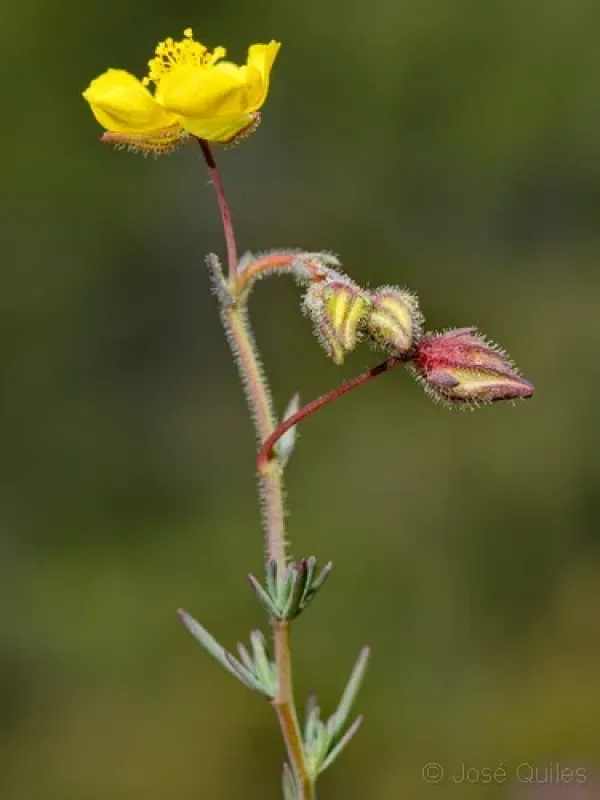
Description
Growing requirements
Fumana laevipes is a perennial subshrub belonging to the Cistaceae family. While not a conventional agricultural crop, it represents a specialized group of plants adapted to survive in extremely harsh environmental conditions, typical of Mediterranean arid landscapes.
The plant originates from dry, stony environments and calcareous slopes. It is biologically characterized by a strong root system designed to penetrate rock crevices, which allows the plant to extract moisture from deep soil layers during the severe summer drought periods.
Botanically, it features small, hardy leaves and a compact growth habit that reduces the overall surface area exposed to transpiration. This xerophytic adaptation is essential for its survival in environments where other plant species fail to germinate or grow successfully.
The environmental requirements include high light intensity and exceptionally well-drained soil. Fumana laevipes thrives in nutrient-poor substrates and is highly sensitive to waterlogging, which often leads to root rot if soil aeration is compromised in an experimental setting.
In terms of agricultural or ecological usage, Fumana laevipes is currently focused on restoration ecology. It serves as a biological agent for stabilizing degraded, gravelly soils and preventing erosion in areas where topsoil conservation is a critical challenge due to lack of traditional vegetation cover.