
Western umbrella-sedge
Fuirena simplex
Description
Growing requirements
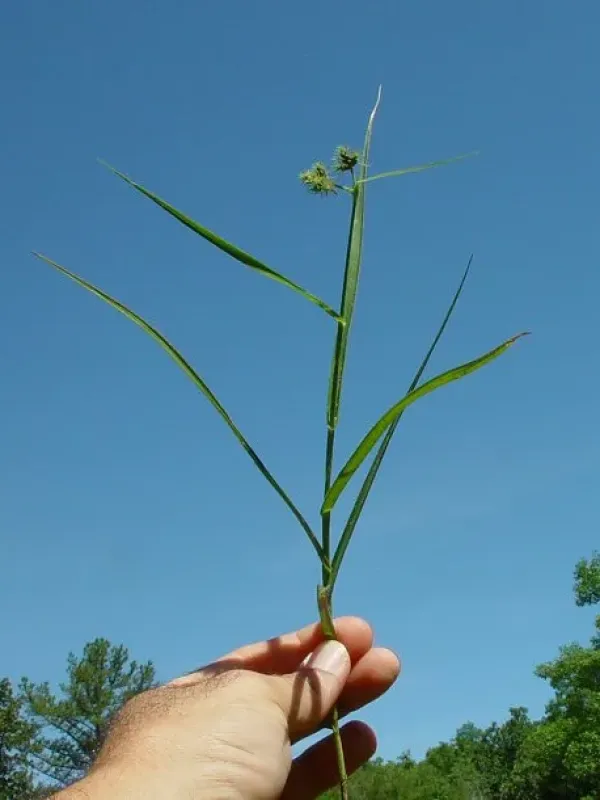
Fuirena simplex, commonly known as the Western umbrella-sedge, is a perennial plant belonging to the Cyperaceae family. It is characterized by its distinct, grass-like appearance with prominent nodes along the stem and unique clusters of brownish spikelets that resemble an umbrella shape.
The plant originates from the Americas, where it is primarily found in wetland habitats, moist meadows, and along the margins of various water bodies. Its natural distribution is closely tied to regions characterized by high annual precipitation and persistent water saturation.
The crop thrives in saturated soil conditions, preferring wetlands or poorly drained soils that would be detrimental to most traditional field crops. It exhibits significant tolerance to periodically flooded environments, making it an excellent candidate for specific agro-ecological niches.
Climate requirements involve a preference for temperate to warm tropical zones. The species requires consistent warmth and high humidity to achieve maximum biomass yield, as its physiological processes are optimized for aquatic and semi-aquatic environments.
In terms of agricultural and land management utility, Fuirena simplex is primarily valued for soil stabilization and environmental restoration. Its extensive root system helps prevent soil erosion in low-lying areas, and it provides essential biomass that can be utilized in managed grazing systems.