
Fuirena scirpoidea
Fuirena scirpoidea
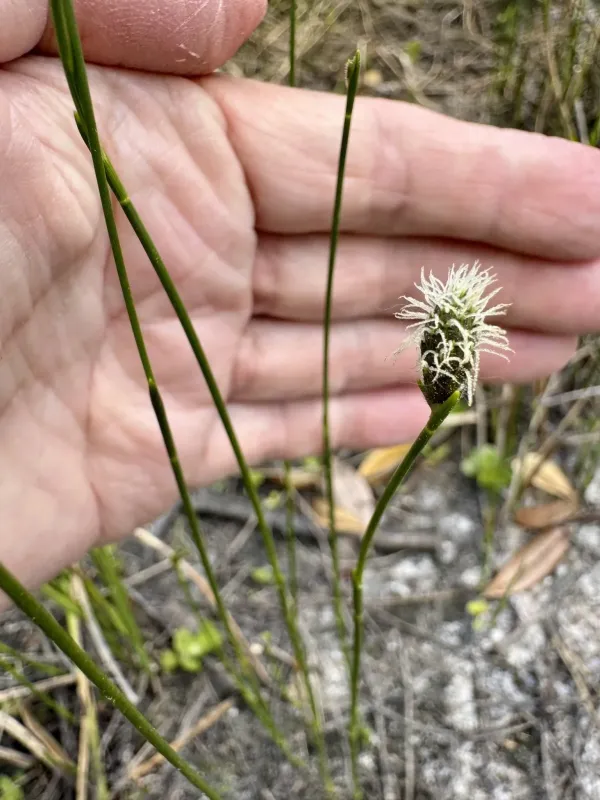
Description
Growing requirements
Fuirena scirpoidea belongs to the sedge family (Cyperaceae). It is a perennial herbaceous plant that naturally thrives in waterlogged areas, shorelines of water bodies, and marshy soils.
The crop prefers specific hydromorphic conditions. It successfully grows in soils with high groundwater levels, where other forage crops cannot survive due to constant moisture excess.
The plant possesses a well-developed root system, which allows it to stabilize soil. The optimal temperature range for active growth is within a temperate-to-warm climate, which limits its widespread distribution in northern latitudes.
It has moderate light requirements, though it grows significantly better in open, well-warmed areas, provided there is no prolonged moisture deficit in the root zone.
From an agricultural standpoint, Fuirena is valued for its ability to form dense stands on complex, swampy lands previously considered unsuitable for traditional farming.
Yield
The economic use of this species is focused on the production of plant biomass. In natural floodplain meadows, Fuirena scirpoidea demonstrates stable productivity, providing high-quality green fodder for specific types of livestock.
The biomass of this plant can be used not only as fresh fodder but also as raw material for hay production, provided it is harvested before the stems become overly fibrous.
A key aspect is its nutritional value: in the early stages of growth, the plant contains a sufficient amount of protein, making it a valuable component of pastures in flooded zones.
Crop productivity is directly dependent on the hydrological regime of the site. Controlled flooding can contribute to increased above-ground biomass yield by intensifying growth during the growing season.
The use of Fuirena in agricultural practice is also considered for phytoremediation purposes and for strengthening shorelines, which indirectly impacts the economic viability of utilizing difficult terrain.
Main diseases and pests
Typical diseases for this species include various fungal infections, which occur when soil aeration is compromised or when water stagnates in combination with high air temperatures.
Among pests, the greatest danger comes from insects feeding on the succulent stem tissues. Damage caused by larvae of various weevil species can significantly reduce the total harvest.
Parasitic organisms often attack the root system during periods of sudden water level drops, when the plant is under stress due to moisture deficiency.
Rodent infestations in growth areas can lead to localized destruction of clusters, especially during the winter period when the aerial parts of the plants dry out.
To prevent the spread of pests, it is recommended to practice crop rotation where possible and maintain an optimal water balance to avoid weakening the plants' natural immunity.