
Fuirena ciliaris
Fuirena ciliaris
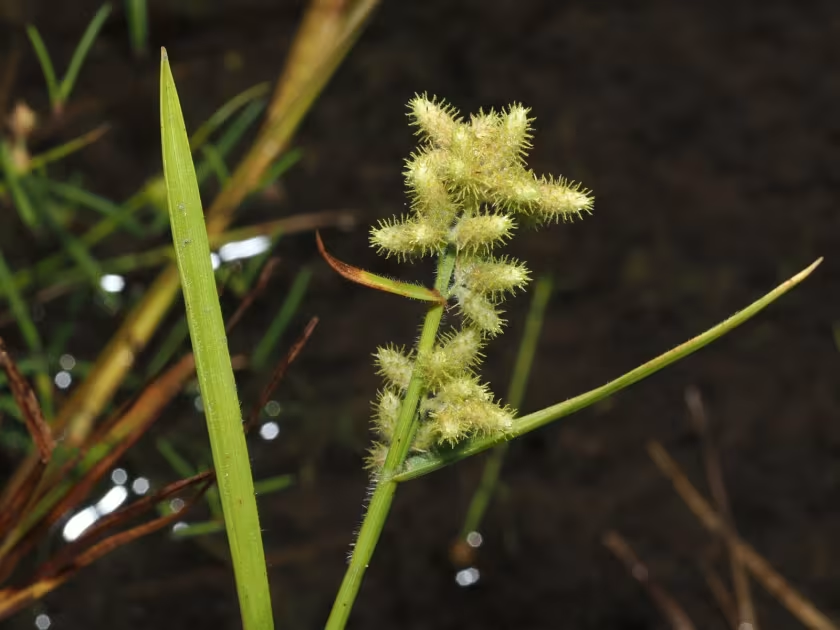
Description
Sowing dates
Fuirena ciliaris is a moisture-loving plant, making its sowing season strictly tied to the onset of the rainy season or periods of active flooding. The optimal time for planting is when the soil temperature consistently exceeds 20°C.
The seeds of this plant are very small, requiring shallow placement in a moist substrate. It is crucial to maintain steady moisture levels during the initial germination stages, as soil dehydration can lead to seedling failure.
In natural tropical habitats, the plant often propagates through self-seeding after floodwaters recede. For specialized farming, row sowing at high density is recommended to effectively suppress competing weed species.
The germination process requires high relative humidity. Significant nighttime temperature fluctuations during the seedling phase can drastically slow down the development of the plant's root system.
Once the first true leaves emerge, the crop begins active vegetative growth, which requires the application of nitrogen-based fertilizers in intensive agricultural settings.
Growing requirements
Fuirena ciliaris is an annual herbaceous plant belonging to the Cyperaceae family, naturally occurring in tropical and subtropical regions of Africa, Asia, and Australia. It is evolutionarily adapted to wetlands, water margins, and rice paddies.
The crop has high water requirements; the soil must remain saturated or temporarily flooded. It does not tolerate prolonged dry periods well, rendering it unsuitable for cultivation on drained fields without constant irrigation.
It prefers organic-rich, silty, or alluvial soils with a neutral or slightly acidic pH. A key biological characteristic of this species is its ability to withstand complete submersion under water for short durations.
Light intensity is vital for the plant's photosynthetic activity. Being a heliophilous species, Fuirena ciliaris shows stunted growth and reduced biomass accumulation under heavy shading.
From an agronomic perspective, controlling water mineralization is important, as excessive salt concentrations can adversely affect the development of the plant's aerial parts.
Yield
The economic use of Fuirena ciliaris is primarily linked to the production of green biomass, utilized as fodder for livestock in coastal and wetland areas. In some regions, it is considered a valuable component of natural pasturelands.
Biomass yield depends directly on water availability and soil nutrient content. Under optimal conditions during active growth, the plant can form a dense stand with high nutritional value for foraging animals.
Dry matter yields remain stable as long as there is regular water replenishment. Its use as green manure is also common, as the plant effectively enriches the soil with organic matter in wetland agricultural systems.
In rice cultivation systems, this crop often acts as a companion species that can serve as secondary fodder following the main rice harvest.
Maximum productivity is achieved through balanced nitrogen-phosphorus fertilization, which stimulates tillering and expands the total leaf surface area.
Main diseases and pests
The primary threats to Fuirena crops are fungal infections that thrive in stagnant water and high humidity. Various leaf spot diseases are known to affect the foliage, potentially reducing photosynthesis.
Insect pests, such as larvae of certain Lepidoptera, may damage the stems, thereby reducing the plant's structural integrity. Additionally, larvae of common rice pests can pose a threat when grown in proximity to paddy fields.
Competition from other hygrophilous weeds often suppresses Fuirena growth in early stages. Timely weeding or water-level management is essential to give the crop a competitive advantage over aggressive weed species.
Nematodes inhabiting saturated soils can infect the root system, causing general growth suppression. This necessitates strict crop rotation and integrated phytosanitary control measures.
When pathogen buildup is observed in the soil, the use of biological control methods is recommended, as chemical pesticide applications are restricted near water bodies due to environmental impact concerns.
Harvesting
Harvesting is typically conducted during the mass flowering stage, when the nutrient concentration in the aerial biomass is at its peak. Mowing can be performed manually or mechanically depending on the terrain and accessibility of the field.
To produce hay, the harvested material requires long drying times due to the high internal moisture content of the stems. Pre-drying in windrows is frequently employed to accelerate the removal of excess water.
When used as fresh green fodder, harvesting is done on an as-needed basis to ensure a constant supply of succulent biomass. This practice also helps minimize losses from lodging or over-maturation.
For seed collection, which occurs after the panicles have fully matured, it is vital to prevent yield loss from shattering. Seeds are hand-collected during dry weather and subsequently cleaned and dried in the shade.
Post-harvest processing involves sorting the material and storing it in dry, well-ventilated structures to prevent spoilage and mold growth, which are critical issues for moist fodder.