
Fuirena pubescens
Fuirena pubescens
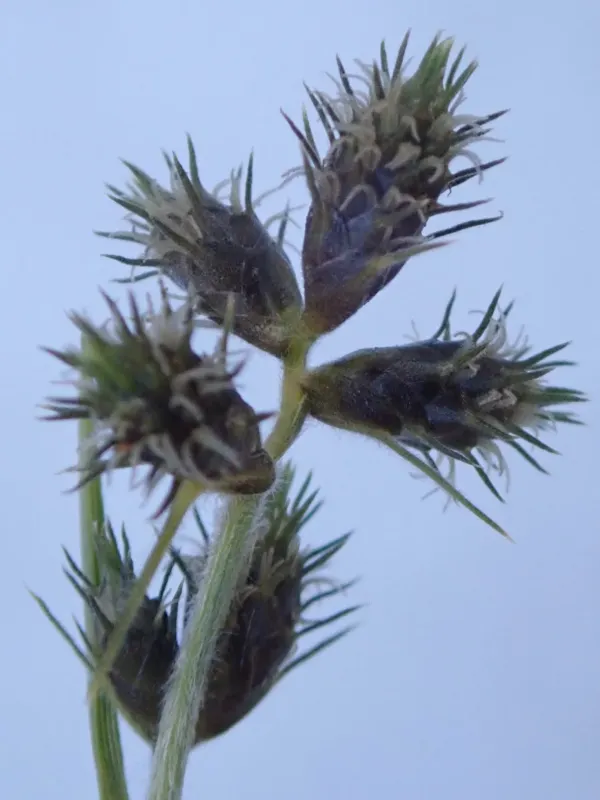
Description
Growing requirements
Fuirena pubescens is a perennial herbaceous plant belonging to the Cyperaceae family, commonly known as the sedge family. This species is primarily found in wetland environments, thriving in habitats where water saturation is consistent throughout the year, such as marshy areas and stream banks.
The plant is characterized by its distinct pubescent (hairy) stems, which serve as a primary taxonomic feature distinguishing it from other species in the genus. Its morphological structure supports efficient gas exchange in waterlogged soils, allowing it to dominate in competitive, moisture-rich environments.
Regarding cultivation requirements, Fuirena pubescens demands high soil moisture and typically thrives in substrate conditions ranging from boggy to seasonally flooded. It prefers sunny locations and is particularly well-adapted to warm climates, showing strong resilience to high environmental temperatures.
The growth strategy of this plant involves the formation of dense root systems that contribute to soil stabilization. This makes it an ecologically significant species for managing fragile riparian zones and protecting water banks from erosion caused by water currents.
Agricultural and environmental interest in this plant is primarily focused on its role in natural wetland restoration and potential utility in biological water treatment systems. While not a conventional food crop, its biomass production in wet conditions offers potential for specific niche applications in sustainable land management.