
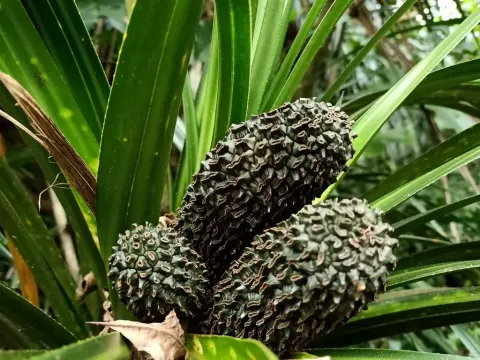
Freycinetia
Freycinetia
Freycinetia is a genus of evergreen woody vines belonging to the Pandanaceae family. Native to the tropical regions of Asia, Australia, and the Pacific Islands, these plants typically grow as epiphytes or climbers, utilizing trees for vertical support in their natural habitat.
What the section contains


Freycinetia
To successfully cultivate Freycinetia, specific tropical conditions are required, including high relative humidity (above 70-80%) and stable temperatures ranging from +22°C to +28°C. These plants are highly susceptible to cold and do not tolerate any degree of frost.
The substrate must be light, porous, and well-draining. Mixtures containing bark, charcoal, and sphagnum moss are ideal, as they replicate the natural growing conditions of epiphytic plants in the forest canopy.
Light should be bright but filtered. Direct sunlight can cause severe scorching of the leathery leaves, making the use of shade cloth or greenhouse shading essential for commercial or home cultivation.
Watering must be regular to ensure the root system stays moist without becoming waterlogged, as stagnant water quickly leads to root rot. High-tech misting systems are recommended for maintaining required atmospheric moisture.
The primary threats to Freycinetia under improper management are fungal diseases, such as root rot and leaf spot. These issues are typically triggered by overwatering and poor air circulation within the growing environment.
Common pests include spider mites, which thrive in low-humidity environments, as well as scale insects and mealybugs. These pests feed on plant sap and can weaken the vines if left untreated.
Preventative care includes regular inspections, maintaining the correct microclimate, and sanitizing pruning tools. Chemical pesticides and fungicides should only be applied when non-chemical control measures prove ineffective.
Growers should monitor substrate salt levels, as accumulation from irrigation water can stunt growth and induce chlorosis, negatively impacting the overall aesthetic and health of the vine.
Maintaining a constant airflow around the foliage is a key agronomic strategy to prevent the proliferation of pathogenic fungi and to ensure strong development of the plant's vegetative structure.