
Freycinetia cumingiana
Freycinetia cumingiana
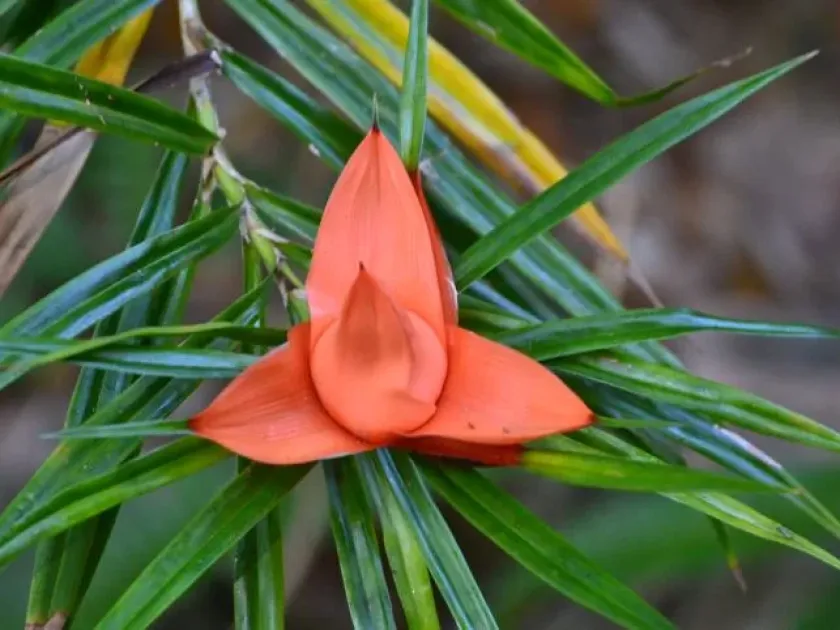
Description
Growing requirements
Freycinetia cumingiana is a robust woody vine belonging to the Pandanaceae family. Native to the Philippines, it is well-known for its epiphytic growth habit, utilizing aerial roots to climb trees within tropical rainforest ecosystems.
The climate requirements for this species are strict, demanding high constant humidity and tropical temperatures. It performs best in a greenhouse environment where temperatures range from 20°C to 28°C, as the plant cannot tolerate cold or freezing conditions.
Cultivation requires a well-draining, airy substrate. A mixture of orchid bark, coconut husk chips, perlite, and a small amount of peat is ideal to mimic the natural debris found in the canopy where this plant naturally thrives.
Light levels should be bright but filtered to avoid scorching the leather-like foliage. In indoor settings, placing the plant near an east-facing window or under artificial grow lights provides the necessary photon flux density for healthy development.
Cultural practices include misting the foliage frequently to maintain a high ambient humidity level. Watering should be deep but intermittent, allowing the top layer of the substrate to dry slightly before the next irrigation to ensure adequate aeration for the roots.
Main diseases and pests
Freycinetia cumingiana is susceptible to various pests, particularly in indoor environments with limited airflow. Spider mites are a major threat, thriving in dry air conditions and causing stippling on the leaves.
Scale insects and mealybugs often hide in the tight axils of the leaves, making them difficult to detect until an infestation is well-established. Routine physical inspection is essential for early detection and manual control.
Fungal infections such as leaf spot are typically associated with poor air circulation or overcrowding. Providing enough space between plants and maintaining a steady flow of fresh air significantly reduces the risk of pathogen spread.
Root rot is the most common physiological disorder caused by waterlogged soil. Ensuring the pot has proper drainage holes and using a coarse potting medium is the primary method of preventing lethal root decay.
Nutrient toxicity, manifesting as burnt leaf margins, can occur if high-concentration chemical fertilizers are used. It is recommended to use diluted, organic-based fertilizers specifically formulated for tropical epiphytes during the active growing season.