
Climbing Freycinetia
Freycinetia scandens
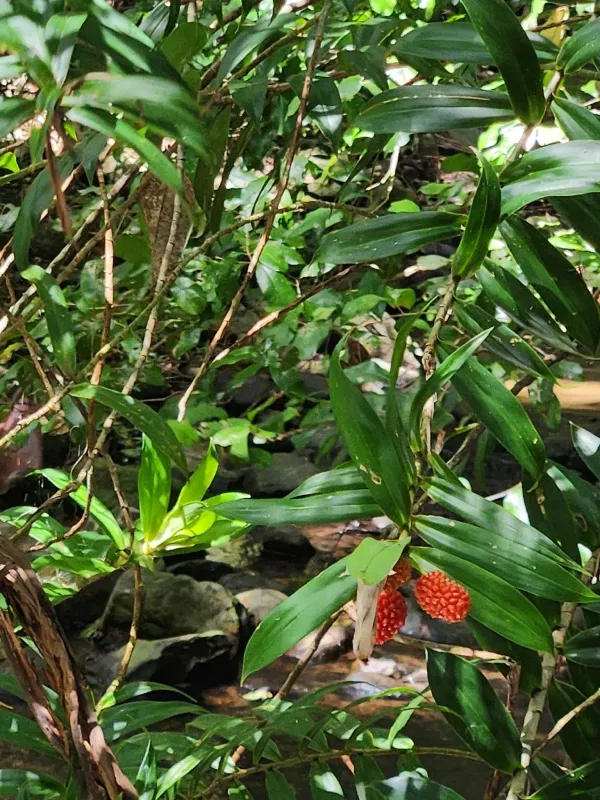
Description
Growing requirements
Freycinetia scandens, known as the Climbing Freycinetia, is an intriguing member of the Pandanaceae family. Originating from the tropical rainforests of Southeast Asia and the Pacific, this evergreen climber has adapted to thrive in high-humidity canopy layers.
Botanically, it is characterized by its woody stems and spirally arranged, lanceolate leaves. The plant features specialized adventitious roots that anchor it securely to host trees, allowing it to scale vertical surfaces in its natural habitat efficiently.
This species demands specific climate conditions, prioritizing high temperatures ranging from 20°C to 28°C throughout the year. It does not possess a dormancy period, meaning it requires consistent warmth and protection from cold drafts, making it suitable for greenhouses.
Soil composition must provide both excellent moisture retention and superior drainage. A mixture containing orchid bark, peat moss, perlite, and charcoal mimics the epiphytic growth environment, ensuring that the roots remain aerated and preventing stagnation.
Light requirements for this climber involve bright, indirect exposure. While it can withstand partial shade, consistent low-light conditions will lead to leggy growth and loss of the characteristic deep green coloration of its foliage.
Main diseases and pests
The primary pests affecting Freycinetia scandens in cultivation include scale insects and mealybugs. These pests hide within the dense leaf bases, making manual removal difficult; therefore, insecticidal soap or oil-based treatments are often necessary.
Fungal pathogens pose a significant threat when air circulation is inadequate. Root rot, typically caused by Pythium species, manifests when the root zone is kept overly saturated, leading to quick deterioration of the lower stem and foliage.
Spider mites are a common secondary threat, particularly during dry winter months in temperate greenhouses. Regular misting and maintaining humidity levels above 65% are effective preventive measures against these infestations.
Leaf spot diseases can occur due to water droplets lingering on foliage for extended periods, especially in cooler, humid conditions. Proper airflow and watering at the base of the plant help mitigate these risks effectively.
Careful monitoring is required to detect early signs of nutritional deficiencies or systemic infections. Any affected plant material should be pruned immediately to prevent the spread of fungal spores across the cultivation area.