
Paederia scandens
Paederia scandens
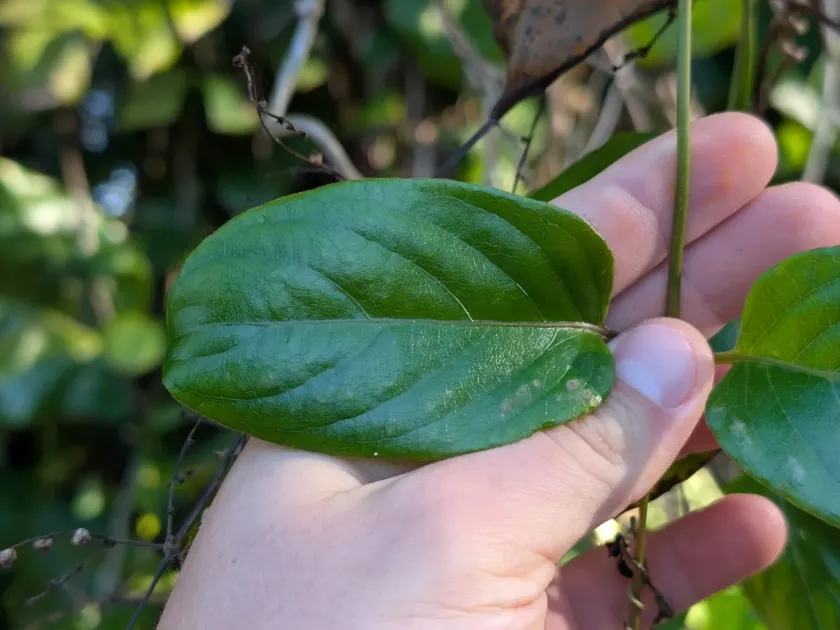
Description
Sowing dates
Paederia scandens, commonly known as skunk vine, is a perennial climbing plant belonging to the Rubiaceae family. It is known for its rapid growth rate and medicinal properties.
Propagation is typically achieved through seeds or stem cuttings. For seed sowing, a well-prepared seedbed with a temperature range of 20–25 degrees Celsius is essential for successful germination.
When using cuttings, segments of semi-hardwood stems are selected during the active growing season. These cuttings are rooted in a moist, nutrient-rich propagation medium.
For commercial cultivation, direct planting or transplanting of seedlings is carried out in early spring, once the threat of frost has completely passed in the local region.
Proper spacing is crucial to ensure adequate airflow and light penetration, as the plants exhibit strong twining behavior that can lead to dense, overcrowded thickets if not managed.
Growing requirements
This species thrives in humid tropical and subtropical environments. It requires consistent moisture throughout the growing season but is intolerant of waterlogged soil conditions.
The ideal soil is fertile, loose, and slightly acidic. Good drainage is non-negotiable to prevent root rot, which is the most common issue associated with poor soil quality.
Providing structural support is a fundamental requirement for Paederia scandens. Without trellises or supports, the plant will trail on the ground, reducing its productivity and accessibility for harvest.
Optimal light conditions include full sun to partial shade. While it can survive in shaded areas, maximum leaf biomass and secondary metabolite production are achieved in sun-exposed sites.
Fertilization with a balanced nitrogen-phosphorus-potassium mix should be applied in the early stages of growth to support the vigorous development of vegetative mass.
Yield
The economic yield of Paederia scandens is calculated based on the weight of the harvested leaves and soft stems. Multiple harvests per season are possible under optimal conditions.
Producers aim to maximize leaf biomass through regular pruning and fertilization. By removing the primary terminal buds, growers can encourage branching and increase the total harvestable area.
The time from planting to the first harvest typically spans several months. Regular monitoring of leaf condition ensures that harvesting occurs at the peak of phytochemical potency.
Yield efficiency is highly dependent on the quality of the support system. Vertical systems facilitate easier and faster harvesting compared to ground-based cultivation methods.
In well-managed fields, the plant exhibits a rapid recovery period, allowing for a sustained harvest throughout the peak growing season without exhausting the plant's resources.
Main diseases and pests
The plant is susceptible to various fungal pathogens, especially in high-humidity climates. Leaf spots and root rot are common in fields with poor ventilation and drainage.
Pest pressure from aphids and spider mites can significantly impact health. These pests feed on succulent tissues, leading to stunted development and reduced market value.
Weed competition during the initial establishment phase is a major threat. Mulching or manual weeding is recommended until the vines have established a closed canopy.
Effective disease management involves implementing preventive measures such as crop rotation, clearing plant debris, and ensuring that irrigation methods keep the foliage relatively dry.
In instances of severe infestation, integrated pest management strategies, including biological controls or targeted application of registered pesticides, are necessary to safeguard the crop.
Harvesting
Harvesting is performed by manually or mechanically cutting the stems above the base of the plant. This method allows the root system to remain intact for regrowth.
Harvested material must be processed quickly to maintain quality. The plant contains volatile sulfur compounds, and prolonged heat exposure during storage can degrade its chemical profile.
Drying is a critical post-harvest step. The material should be spread in thin layers in a dry, shaded area with high air circulation to prevent mold formation and oxidation.
Once dried, the plant material is sorted to remove woody stem segments and any discolored or damaged leaves, ensuring only high-quality biomass reaches the market.
The final product is stored in airtight, moisture-resistant packaging in a cool environment to preserve its aromatic properties and active medicinal components for future usage.