
Frankenia thymifolia
Frankenia thymifolia
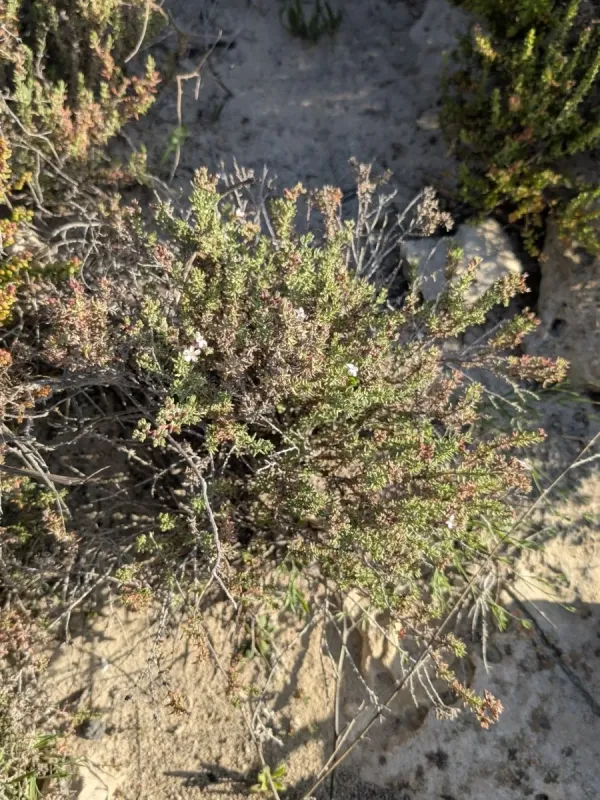
Description
Growing requirements
Frankenia thymifolia is a perennial subshrub belonging to the Frankeniaceae family. It is a highly specialized halophyte, naturally adapted to thrive in harsh, saline environments where traditional agricultural crops fail to survive or produce any viable biomass.
The plant exhibits remarkable physiological resilience to aridity and high soil mineralization. Its botanical structure, featuring small thyme-like leaves, allows the plant to minimize water transpiration, effectively balancing its internal osmotic pressure in saline conditions.
Optimal growth requires well-drained, porous soils with a significant mineral content. Producers should avoid sites with heavy clay or high moisture retention, as stagnant water is detrimental to the plant’s health and root development, often leading to rot.
Climatic requirements involve full exposure to sunlight and moderate temperatures typical of arid or semi-arid zones. Providing consistent sunlight is essential for the plant to maintain its characteristic low-profile growth habit and structural integrity throughout the season.
Agricultural use focuses primarily on phytoremediation and soil stabilization. By planting Frankenia thymifolia on degraded or salted lands, farmers can effectively prevent wind erosion and improve soil health, eventually facilitating the recovery of more sensitive plant species in the surrounding ecosystem.