
Frankenia boissieri
Frankenia boissieri
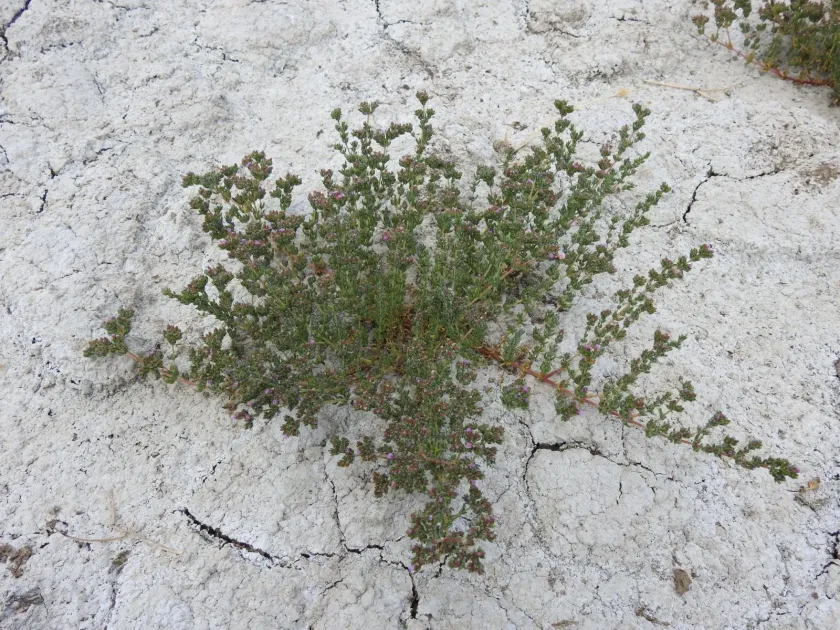
Description
Growing requirements
Frankenia boissieri is a perennial subshrub belonging to the Frankeniaceae family. It is a highly specialized plant adapted to extreme saline conditions and arid environments.
The species originates from the Mediterranean basin, specifically the Iberian Peninsula and North Africa. It is a key component of the saline ecosystems, often thriving where other plants struggle to survive.
Botanically, it is characterized by its compact, low-growing habit and small, densely arranged leaves covered with fine hairs, which aid in water retention and protection against environmental stress.
Requirements for cultivation include full sun exposure and well-draining soil with moderate to high salinity levels. It possesses specialized salt-secreting glands on the leaves, which is a unique physiological trait.
Its primary use is in salt-affected land reclamation and as a decorative ground cover in xeriscaping, providing sustainable green solutions for harsh climates.
Main diseases and pests
The primary threat to the health of Frankenia boissieri is waterlogging, which often leads to root rot if the soil moisture remains consistently high.
Poor air circulation and high humidity levels can predispose the plant to fungal diseases, including powdery mildew, especially in sheltered or greenhouse environments.
Spider mites are the most common pests, as they thrive on the undersides of the leaves, particularly during periods of extreme heat and drought stress.
Soil-borne pests may damage the root system, causing significant stunting of growth, which necessitates the use of biological or chemical preventative controls.
Maintaining a balanced irrigation schedule and ensuring proper spacing between plants are critical management practices to mitigate the risk of these common pathogens.