
Hairy sea-heath
Frankenia hirsuta
Description
Growing requirements
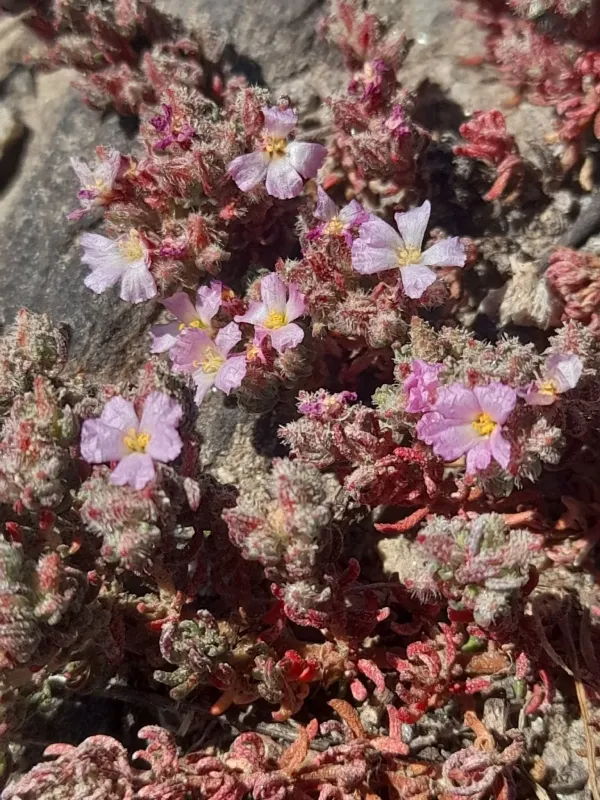
Frankenia hirsuta, commonly known as Hairy sea-heath, is a perennial plant belonging to the Frankeniaceae family. It is a specialized halophyte, naturally adapted to extreme environmental conditions including high soil salinity and arid climates.
Native to various saline ecosystems and arid regions, this plant plays a significant role in ecological succession and soil stabilization. Its morphological features include small, pubescent leaves designed to minimize water loss, and a robust root system capable of operating in high osmotic pressure environments.
From an agricultural and environmental perspective, this species is highly valued for phytoremediation. It can colonize salt-affected soils where traditional crops fail, helping to improve soil structure and prevent erosion in degraded coastal or desert areas.
The climate requirements for Frankenia hirsuta include high solar radiation and a warm environment. It thrives in full sun and requires minimal maintenance, as it is evolved to withstand periods of extreme drought and high mineral concentrations in the soil solution.
In terms of soil management, it prefers well-drained, sandy or loamy soils that maintain their saline status. It is not intended for high-intensity cultivation but rather as a specialized plant for managing wasteland or areas affected by secondary salinization.
Main diseases and pests
The primary threat to Frankenia hirsuta populations is the alteration of soil chemistry, specifically the sudden removal of salt, which makes the plant susceptible to competition from non-halophytic vegetation.
Root rot caused by stagnant water is a major concern, as the species requires well-aerated soil despite its high tolerance for salts. Constant moisture can be fatal to its specific physiological adaptations.
While the plant possesses natural defenses against many common pests due to its high salt content in tissues, specific specialized insects can cause localized leaf damage.
Fungal pathogens are rarely an issue unless the plants are cultivated under greenhouse conditions with poor ventilation and high humidity, which mimics an unnatural environment.
There are no significant reports of major agricultural viruses affecting the crop, making it a reliable choice for sustainable land restoration projects in saline environments.