
Frankenia pulverulenta
Frankenia pulverulenta
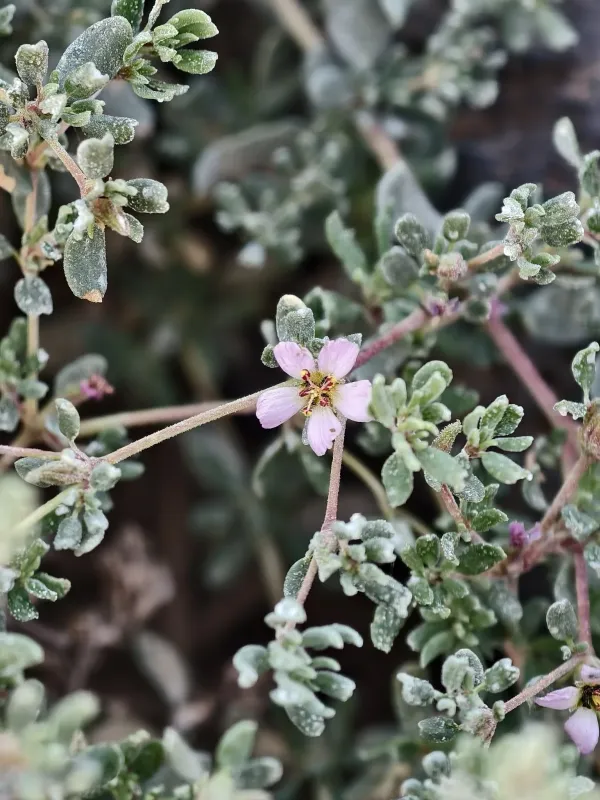
Description
Growing requirements
Frankenia pulverulenta is a herbaceous annual belonging to the Frankeniaceae family. It is a specialized halophyte, evolutionary adapted to survive and thrive in soils with extremely high levels of salinity where typical crops fail.
The plant is native to the Mediterranean basin, the Middle East, and parts of Central Asia. It is commonly found in salt marshes, saline depressions, and arid coastal regions characterized by harsh environmental conditions.
Optimal growth requires high solar exposure and well-drained, saline-heavy soils. The species is highly sensitive to shading, making weed management a critical component of its cultivation in agricultural settings.
Climate requirements include high temperatures and low annual precipitation. It is a heat-loving plant that completes its life cycle during the warmer months, avoiding frost-prone periods during its active growth phase.
Technical cultivation practices focus on site preparation to ensure even germination. While the plant is drought-resistant, maintaining sufficient moisture in the topsoil during the initial stage of growth significantly increases the density of the final stand.
Yield
The primary agricultural use of Frankenia pulverulenta is in soil remediation and the restoration of degraded saline lands. It acts as an effective soil stabilizer, protecting ground surfaces from erosion caused by wind and water.
Yield, in terms of biomass production, is heavily dependent on the salinity levels of the site. In dense stands, the plant provides significant organic matter input, which, over time, helps to improve the physical structure of saline soils.
Seed harvesting is performed during the peak of maturity when the seed capsules exhibit a characteristic brown color. Efficient harvesting methods are required to minimize seed loss due to the plant's natural dehiscence mechanisms.
This species serves as a valuable component in ecological engineering projects, allowing for the rehabilitation of marginal lands that are unsuitable for traditional food crops, thus preventing land abandonment.
Ongoing research investigates the phytochemical composition of the plant for potential industrial or pharmaceutical applications. The unique metabolism of this halophyte under salt stress remains a key area of botanical study.