
Alkali heath
Frankenia salina
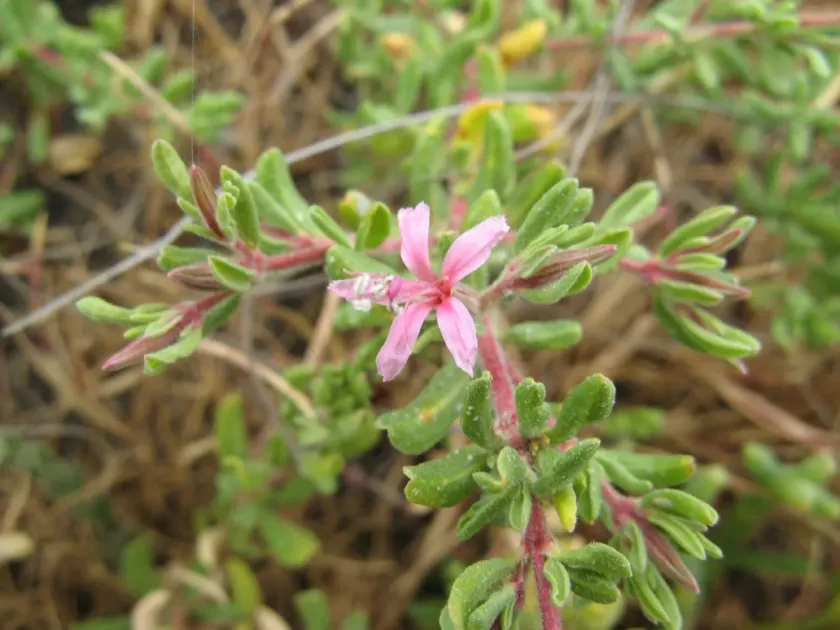
Description
Growing requirements
Frankenia salina, commonly known as Alkali heath, is a perennial subshrub belonging to the Frankeniaceae family. It is a highly specialized halophyte that has evolved to thrive in soils with elevated salinity levels that would be toxic to most other crops.
The plant exhibits distinct morphological adaptations, such as small leaves with rolled margins and glandular hairs, which help minimize water loss. Its root system is specialized to manage sodium ions, allowing the plant to maintain osmotic balance.
Native to coastal and inland salt marshes of North and South America, this plant is increasingly recognized for its role in agricultural and environmental management. It serves as an essential component for the reclamation of barren, salty land.
The plant requires well-drained, saline soils for optimal development. It shows remarkable tolerance to alkaline substrates and periodic saturation with saline water, making it a valuable candidate for greening arid and salty regions.
Alkali heath thrives in full sun and is adapted to the harsh conditions of coastal and desert environments. It possesses high resistance to extreme temperature fluctuations, provided it has established a deep enough root system in the early growth stages.
Yield
The primary use of Frankenia salina lies in ecological restoration and phytoremediation. By accumulating salts within its biomass, it effectively helps in reducing the salinity of agricultural soils over successive growing seasons.
It is utilized in some regions as part of marginal grazing lands. While its nutritional profile is adapted to specific salt-tolerant livestock, it serves as an important source of minerals and forage where other vegetation fails to survive.
The plant is highly effective in erosion control. Its dense, sprawling growth habit creates a protective layer over the soil, significantly reducing the impact of wind and water erosion in sensitive coastal areas.
Research into the secondary metabolites of Frankenia salina suggests potential applications in the chemical and pharmaceutical industries. Extracts from the plant are being studied for their unique biochemical properties.
Implementing Frankenia salina as a commercial crop can transform otherwise useless land into productive ecosystems. It offers a low-input approach to land management, prioritizing environmental health and soil stabilization over high-intensity harvesting.
Main diseases and pests
The main threats to Frankenia salina include fungal pathogens triggered by poor soil aeration and waterlogged conditions. Excessive moisture without sufficient mineral content can weaken the plant, making it susceptible to root rot.
Insect pests are generally rare due to the high salt concentration in the plant tissues, which acts as a deterrent. Damage is usually minimal unless the plants are stressed by drought or incorrect nutrient supply.
Weed competition is a significant threat during the seedling stage. Providing a clean, weed-free seedbed is essential for the first two years of establishment, after which the plant usually dominates its immediate environment.
Sudden changes in soil chemistry, particularly drastic desalination, can disrupt the plant's metabolic functions. Maintaining a consistent salinity level is key to ensuring the long-term health and vigor of the population.
Preventative maintenance includes regular pruning to remove dead or diseased biomass, which encourages healthy regrowth. Proper management ensures that the plant remains a resilient and effective tool for soil conservation and rehabilitation.