
Frankenia corymbosa
Frankenia corymbosa
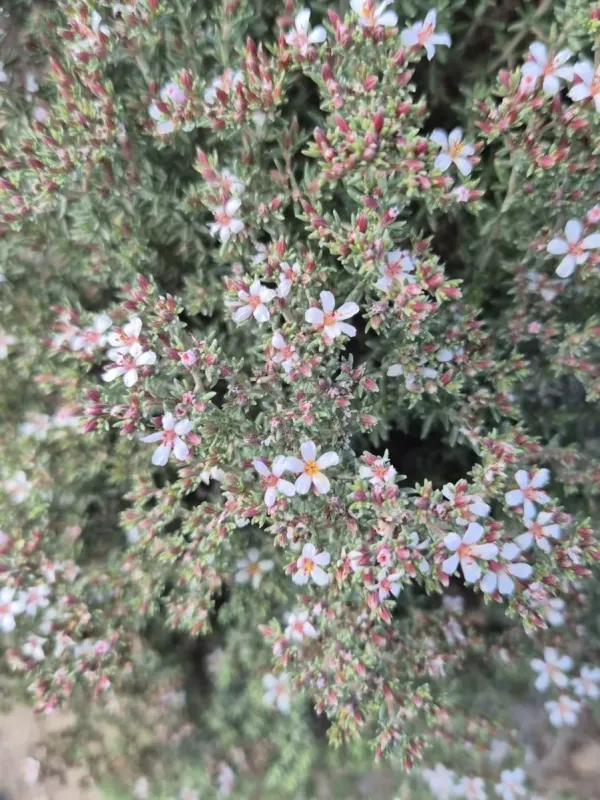
Description
Growing requirements
Frankenia corymbosa is a perennial herbaceous plant belonging to the Frankeniaceae family. It is recognized as a specialized halophyte, capable of thriving in highly saline soils that are typically toxic to standard agricultural crops.
The plant originates from the arid regions of Australia. Its natural distribution is linked to salt pans and desert areas where extreme salinity levels and moisture scarcity define the landscape, forcing the plant to adapt unique physiological survival mechanisms.
Botanically, it is distinguished by small, opposite leaves equipped with specialized salt-secreting glands. These glands are crucial for the plant's salt-tolerance, as they actively remove mineral salts from the plant tissues, preventing toxicity.
Climatic requirements focus on intense solar radiation and high temperatures. Frankenia corymbosa demands well-drained, sandy, or saline soils. It is highly sensitive to excessive moisture, which can disrupt the root system's function and lead to decline.
In terms of agricultural utility, it is primarily used for land reclamation and phytoremediation. The crop helps stabilize loose saline soils and can be used to improve soil structure in degraded areas affected by secondary salinization.
Main diseases and pests
The primary threats to the health of the plantation include fungal diseases that manifest under conditions of poor soil aeration or waterlogging. Root rot is a significant concern that requires careful management of irrigation levels.
Pests affecting Frankenia are generally limited to specific insects adapted to halophytic flora. While the salt content in the leaves serves as a natural deterrent, localized infestations of mites or larvae can occur during prolonged drought periods.
Weed control is rarely an issue due to the extreme environmental conditions the plant is grown in, which naturally exclude non-halophytic species. However, when salinity levels fluctuate, opportunistic invasive plants may attempt to colonize the area.
Effective management includes monitoring the electrical conductivity of the soil to ensure optimal salinity levels for the plant's development. Proper spacing between rows is also critical to ensure sufficient airflow and light penetration.
Preventative measures against pathogens involve maintaining the integrity of the soil surface. Avoiding the compaction of soil is essential to prevent anaerobic conditions that trigger the proliferation of detrimental fungi.