
Rock buckthorn
Frangula rupestris
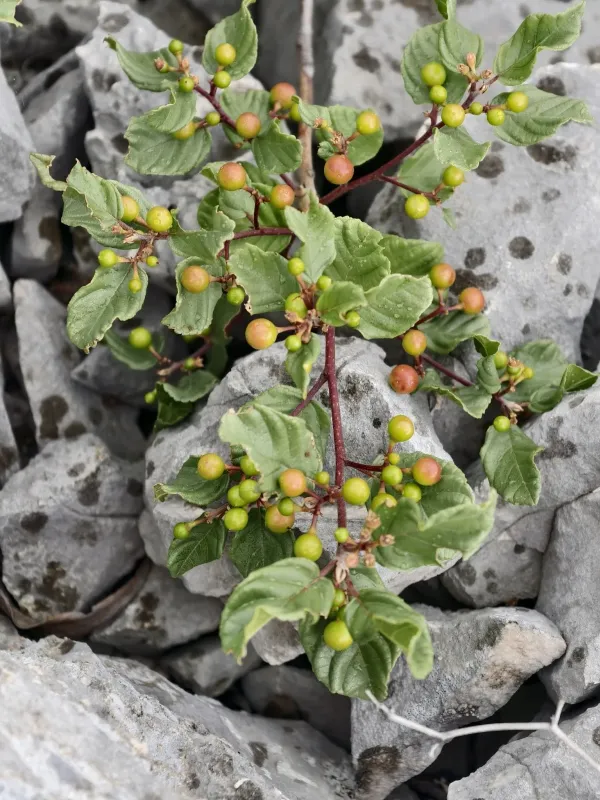
Description
Sowing dates
Sowing seeds of Frangula rupestris is best performed in the autumn, allowing for natural stratification during the winter months. This process mimics the plant's native habitat conditions and ensures a higher germination rate when temperatures rise in spring.
If sowing in spring is necessary, the seeds must undergo cold stratification in a moist medium at temperatures between 1 and 5 degrees Celsius for at least three to four months. Proper moisture balance during this phase is critical to prevent the seeds from drying out or rotting.
Vegetative propagation via cuttings is a common and effective method for clonal multiplication. Semi-hardwood cuttings taken during the active growth period show the best rooting results when placed in a well-draining, sterile substrate under high humidity conditions.
Young seedlings are sensitive to direct sunlight and lack of water during their first season. Therefore, they should be kept in a shaded nursery environment until they develop a sufficiently strong root system to handle transplanting to a permanent location.
Transplanting is generally recommended for spring or early autumn to allow the plants to establish their roots while soil moisture levels are optimal and before extreme heat or cold sets in.
Growing requirements
Rock buckthorn (Frangula rupestris) is a member of the Rhamnaceae family, specifically adapted to rocky and calcareous terrains. Its native range spans southern European regions, where it thrives on limestone slopes and thin, mineral-rich soils.
The primary requirement for this species is exceptional drainage. It is highly susceptible to root diseases if planted in heavy, waterlogged soils, making the inclusion of gravel or coarse sand in the planting pit essential for long-term health.
Sunlight is vital for this plant to maintain its characteristic compact, dense growth habit. While it can tolerate partial shade, full exposure to sunlight results in more robust stems and more abundant fruit production, which is typical for its Mediterranean-influenced nature.
Regarding soil, it prefers neutral to slightly alkaline pH levels. It does not require high levels of organic fertilizer; in fact, overly rich soil can lead to weak, elongated growth that is less resistant to winter frost and mechanical stress.
Climate adaptation is strong once the plant is established. It demonstrates significant drought tolerance, making it an excellent candidate for xeriscaping or low-maintenance ornamental gardening in appropriate hardiness zones.
Yield
Rock buckthorn is primarily valued in agriculture and landscaping for its ecological and aesthetic roles. Its dense, branching habit makes it an effective ground-cover option for stabilizing loose slopes and preventing soil erosion.
As a nectar-producing shrub, it is highly beneficial for local pollinator populations, particularly bees, during the early spring months. Its role in the ecosystem as a food source for birds that consume its berries is also highly regarded.
While not a major commercial agricultural crop for mass production, it is increasingly cultivated in nurseries for urban landscaping projects. Its slow growth rate means that mature specimens are often sought after for specialized rock gardens and naturalistic landscape designs.
The yield of nursery material can be measured by the successful establishment of healthy, uniform container-grown plants. Proper spacing, typically one meter apart, ensures that each plant receives adequate light and airflow to prevent disease spread.
The biological longevity of Frangula rupestris makes it a sustainable investment for long-term landscaping projects, as it requires minimal human intervention once fully established in a suitable microclimate.
Main diseases and pests
The most significant threats to Frangula rupestris include fungal infections, particularly leaf spot diseases and powdery mildew, which thrive in environments with poor air circulation or excessive humidity.
Pests such as aphids and scale insects are common during the spring flush of new growth. These insects can cause damage by extracting sap and weakening the plant, leading to stunted growth or secondary infections if left untreated.
Root rot is the most lethal issue, typically caused by improper watering practices or a lack of soil drainage. Maintaining a dry soil surface around the base of the plant is a critical preventative measure against these pathogens.
Winter damage, including bark splitting or frost heaves, can occur in colder climates. Applying mulch around the base of the shrub can help regulate soil temperature and protect the delicate root system from extreme fluctuations.
- Pruning affected branches to maintain plant hygiene.
- Using preventative fungicides to manage leaf spot issues.
- Applying systemic insecticides if aphid infestations occur.
- Ensuring proper soil drainage at the initial planting stage.