
Alder buckthorn
Frangula alnus
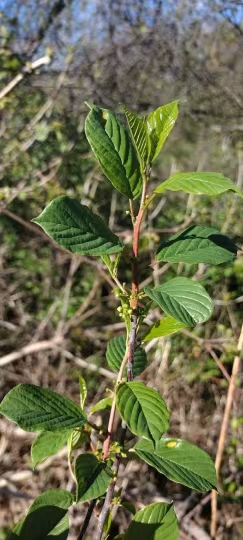
Description
Sowing dates
Alder buckthorn is primarily propagated through seeds, which require a cold stratification period to break dormancy before germination can occur effectively.
Seeds should be sown in autumn to allow for natural exposure to winter temperatures, ensuring uniform sprouting during the following spring season.
In nursery settings, cuttings can also be used; semi-hardwood cuttings taken in mid-summer are the most successful method for ensuring genetic consistency.
When establishing a plantation, young saplings should be spaced to allow for optimal airflow and development of the canopy, which is essential for uniform bark production.
Adequate soil moisture must be maintained during the first growing season to ensure the survival and establishment of the young root systems in the field.
Growing requirements
Belonging to the Rhamnaceae family, this shrub thrives in moist to damp soil conditions and is frequently found in wetland fringes and shaded woodlands.
It prefers acidic to neutral soil types and demonstrates high adaptability to various soil structures, including peat-rich or sandy loam environments.
Alder buckthorn is shade-tolerant, making it an excellent candidate for forest edge enrichment or intercropping systems in agroforestry projects.
While it prefers consistent moisture, it is also hardy against various weather extremes, demonstrating significant resilience in diverse climatic zones.
Minimal fertilization is typically required, though organic matter incorporated into the soil before planting can significantly boost early growth rates.
Yield
The primary economic value of this species lies in its bark, which contains anthraquinone glycosides known for their digestive health benefits.
Sustainable harvesting is achieved by selecting stems of appropriate age, usually 5 to 7 years, ensuring the plant has enough biomass to recover.
Annual yields are influenced by the density of the planting and the health of the root system, which should be protected during the bark stripping process.
Proper management of the stand allows for cyclical harvests, extending the productive life of each individual shrub for many years.
Consistency in yield is maintained by regular thinning and pruning, which promotes the growth of new, vigorous stems suitable for future harvest.
Main diseases and pests
While generally robust, the plant can be susceptible to aphids that cluster on the soft, succulent new growth during the spring months.
Fungal issues such as leaf spot may occur in areas with poor drainage or insufficient ventilation, requiring prompt attention and sanitation.
Management of these threats involves cultural practices such as selective pruning to enhance airflow and the removal of infected plant debris.
The shrub is rarely affected by serious viral diseases, making it a relatively low-maintenance crop for medicinal herb producers.
Integrated pest management strategies focusing on early detection and physical barriers are usually sufficient to maintain crop health without heavy chemical intervention.
Harvesting
Bark harvesting is strictly limited to the spring season when sap flow is at its peak, allowing the bark to be peeled easily from the stems.
Care must be taken to create clean incisions; the bark should be removed in long, smooth strips to facilitate efficient drying and storage.
After collection, the bark must be aged or heat-treated for a specified period, as fresh bark can cause adverse effects if consumed directly.
Drying is performed in thin layers within shaded, ventilated structures to preserve the stability of the active pharmacological compounds.
Storage must be in dry, moisture-resistant packaging to prevent fungal degradation and loss of the medicinal properties essential for commercial market value.