
Forestiera rhamnifolia
Forestiera rhamnifolia
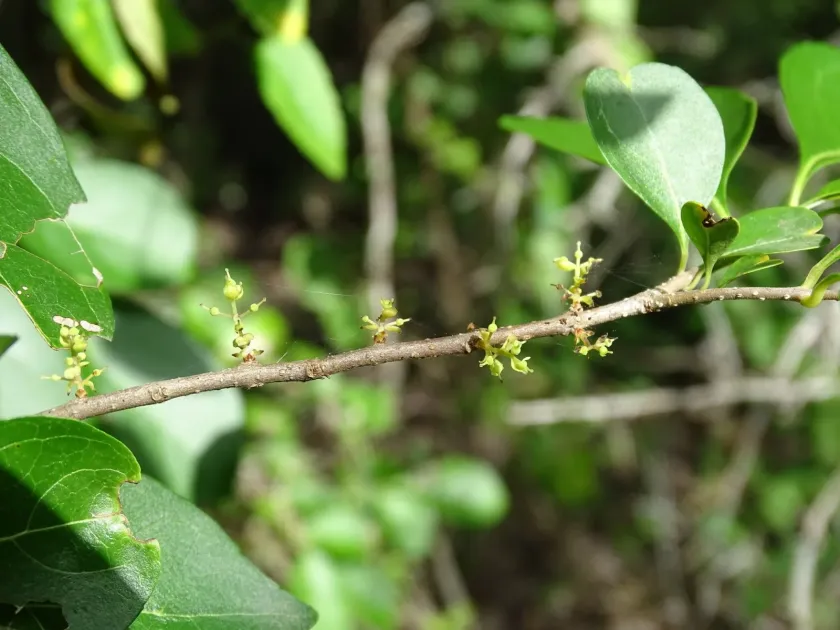
Description
Growing requirements
Forestiera rhamnifolia, commonly known as the buckthorn-leaved forestiera, is a perennial shrub species within the Oleaceae (Olive) family. It is recognized for its dense foliage and its role as an evergreen component in tropical plant compositions.
The plant originates from the Caribbean islands and Central American regions, thriving in warm, humid climates. It is an essential part of the local flora in its native range and is widely adapted to subtropical environments that lack severe frost.
Botanically, this species is characterized by its stiff, branching stems and leathery leaves that resemble those of the buckthorn genus. The inflorescences are small and subtle, followed by the development of dark drupes that are highly favored by various bird species for sustenance.
Successful cultivation requires well-draining, fertile soil with an optimal pH level. The plant prefers sites with ample sunlight, although it can tolerate partial shade, provided it is protected from harsh wind conditions and frost that could damage its foliage.
In terms of хозяйственное usage, Forestiera rhamnifolia is prized by landscapers for its ability to form dense screens and hedge rows. Its rapid growth rate and tolerance to frequent trimming make it an excellent choice for structured garden designs and privacy barriers.
Main diseases and pests
The main threats to the plant include various root rot diseases, which typically develop in waterlogged soil conditions. Maintenance programs should focus on soil aeration and ensuring that drainage systems are efficient to prevent the onset of fungal infections.
Pests such as scale insects and spider mites are frequent invaders that target the foliage of the shrub. Integrated pest management strategies, including the use of horticultural oils or systemic insecticides, are necessary to ensure the long-term health of the planting.