
Forestiera phillyreoides
Forestiera phillyreoides
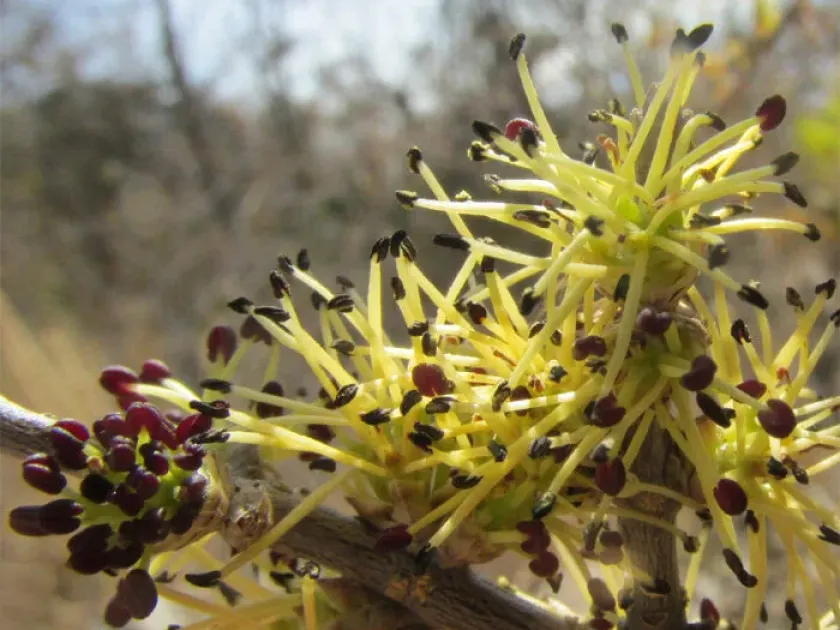
Description
Growing requirements
Forestiera phillyreoides is a resilient shrub or small tree belonging to the Oleaceae family. This species is native to Mexico, where it thrives in rugged, semi-arid environments, demonstrating remarkable tolerance to environmental stressors.
Botanically, the plant is characterized by its evergreen foliage and a compact growth habit. Its leaves are typically small and leathery, an evolutionary adaptation that allows the plant to conserve water efficiently during hot, dry spells.
The cultural requirements for Forestiera phillyreoides center on well-draining soil conditions. It prefers sandy or loamy textures and performs best in locations that receive full sun, which is essential for maintaining its natural dense structure.
Climate adaptation is a key strength of this species. It is well-suited for hot climates where summer temperatures frequently exceed high thresholds, making it a reliable choice for landscaping in arid regions where maintenance resources are limited.
In agricultural and landscaping contexts, it is highly valued as a windbreak and a screening plant. Its ability to tolerate pruning makes it an excellent candidate for formal hedges, while its hardiness aids in soil stabilization and xeriscaping projects.
Main diseases and pests
Common threats to Forestiera phillyreoides primarily include root rot, which is almost exclusively caused by overwatering or poorly drained substrates that deprive roots of oxygen.
Insect pests, such as scale insects and spider mites, may infest the foliage during periods of prolonged drought or heat stress, necessitating regular monitoring of the plant's health.
To maintain plant vigor, it is critical to ensure proper air circulation through the canopy to prevent the accumulation of moisture that attracts fungal pathogens.
Chemical control measures should be applied sparingly, focusing on integrated pest management practices that preserve beneficial insects within the local ecosystem.
Regular maintenance, specifically annual pruning to remove dead wood and overcrowded branches, serves as the most effective preventative measure against both pest outbreaks and fungal diseases.