
Narrowleaf forestiera
Forestiera angustifolia
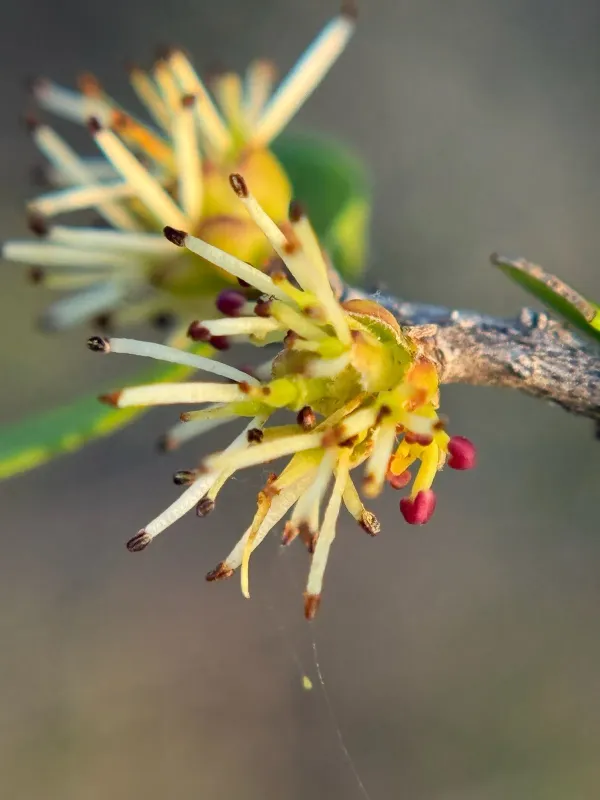
Description
Sowing dates
Propagation of Forestiera angustifolia is best achieved through seed sowing or taking semi-hardwood cuttings during the late summer months.
Seeds benefit significantly from a period of cold stratification, which helps to break dormancy and improves the uniformity of germination.
When sowing in containers, use a well-draining, sandy-loam mix to prevent damping off, which is a common issue for seedlings in stagnant moisture.
Cuttings should be treated with a rooting hormone and placed in a humid environment until a healthy root system is established, typically within a few weeks.
Young plants should be hardened off gradually before being transplanted into their permanent location in the garden or landscape.
Growing requirements
Forestiera angustifolia is a resilient shrub belonging to the Oleaceae family, known for its ability to thrive in arid and semi-arid climates.
It prefers full sun exposure, which ensures dense foliage growth and promotes the development of its characteristic narrow, evergreen-like leaves.
The plant exhibits remarkable soil adaptability but performs exceptionally well in sandy or rocky soils that provide superior internal drainage.
Drought tolerance is one of its primary horticultural virtues, allowing it to survive long periods of extreme heat without supplemental irrigation.
While tolerant of various soil pH levels, it flourishes best in neutral to slightly alkaline conditions, mimicking its native habitat requirements.
Yield
The primary utility of this shrub is ornamental, serving as an excellent candidate for xeriscaping and low-maintenance landscape design.
Its growth habit allows it to be used effectively as a privacy screen or a windbreak, especially in areas where traditional hedges fail.
The small, dark fruits produced by the plant are a vital food source for local wildlife, particularly birds, enhancing the ecological value of the garden.
In conservation projects, the narrowleaf forestiera is valued for its soil-binding capabilities on sloped terrain, preventing erosion over time.
There is limited industrial production, but the shrub's longevity makes it an economical choice for sustainable urban planning and infrastructure greening.
Main diseases and pests
Forestiera angustifolia is generally resistant to most pests and diseases, which is a significant advantage for low-input garden management.
Root rot is the most serious threat, occurring almost exclusively in poorly drained soils where water lingers around the root crown for too long.
Occasional infestations of scale insects or aphids may occur during periods of stress, though they rarely cause fatal damage to a mature shrub.
Sanitation is key; pruning away dead or overcrowded branches improves airflow and helps prevent the buildup of fungal spores within the canopy.
Regular inspection of the leaf underside can help detect early signs of pest activity, allowing for simple manual removal or soft-soap treatment.