
Shrub felicia
Felicia fruticosa
Description
Growing requirements
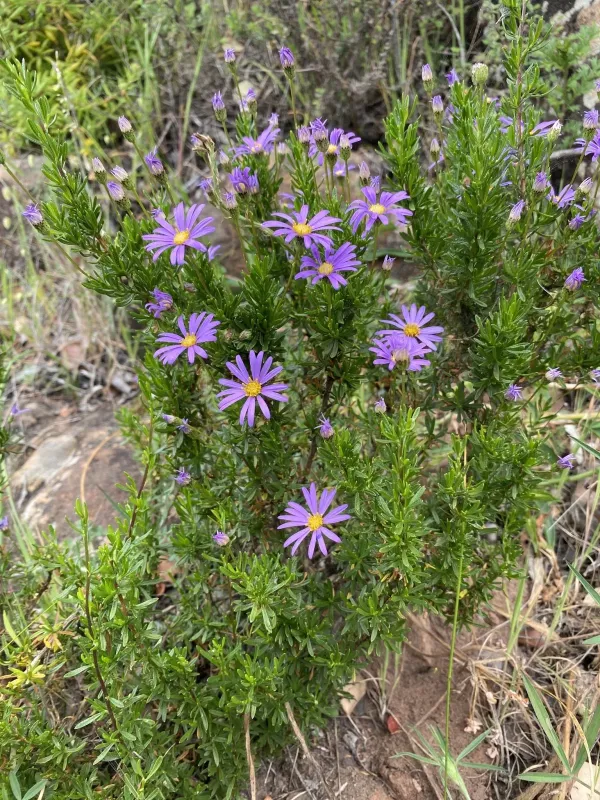
Shrub felicia (Felicia fruticosa) is a prominent member of the Asteraceae family. Originating from the diverse landscapes of South Africa, this perennial subshrub is highly valued for its striking blue, daisy-like flowers and its ability to thrive in Mediterranean-style climates.
Successful cultivation requires well-draining soil with a pH range that is slightly acidic to neutral. High organic content is beneficial, but the plant is sensitive to waterlogged conditions which can lead to rapid root decay if drainage is not prioritized.
The plant demonstrates a strong preference for full sun exposure, which is necessary for vigorous growth and abundant flowering. It is not cold-hardy, and in temperate zones, it is often treated as an annual or overwintered in frost-free greenhouses.
The botanical architecture of Felicia fruticosa involves woody bases with dense, fine foliage that creates a rounded habit. Regular pruning after the main flush of flowers is essential to maintain a compact shape and encourage secondary bloom cycles throughout the season.
Agriculturally and commercially, the plant is used extensively in urban landscaping and for ornamental pot production. Its drought tolerance, once established, makes it a sustainable choice for water-wise garden designs in arid or semi-arid regions.
Main diseases and pests
Pathogen risks primarily involve fungal infections such as root rot and stem blight, which typically occur due to excessive soil moisture and poor ventilation in planting beds.
Pest pressures are common from aphids, which are attracted to the succulent tender growth of the plant during the spring flush. These can be managed through biological controls or targeted sprays.
Spider mites frequently infest the crop during hot and dry summer spells, causing chlorosis and damage to the leaf structure if left unchecked by proper humidity management.
To mitigate these threats, agronomists recommend maintaining optimal spacing between plants to ensure airflow, which is critical for preventing the onset of fungal diseases.
Monitoring for signs of wilting is vital, as this is often the first indicator of root system stress caused by either overwatering or soil-borne pathogens.