
Felicia dubia
Felicia dubia
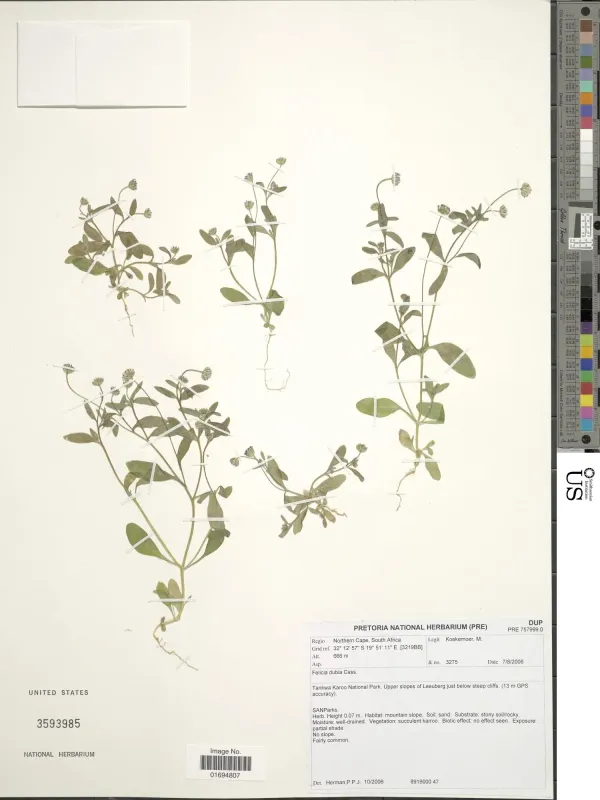
Description
Sowing dates
Felicia dubia is typically propagated via seeds, which should be sown indoors in late winter or early spring to ensure a long flowering season.
The seeds require light to germinate, so they should be pressed lightly into the surface of the growing medium rather than buried deep.
Maintaining a steady temperature of around 20 to 22 degrees Celsius is crucial for consistent germination within a two-week period.
Once the seedlings develop their first true leaves, they should be transplanted into individual pots to avoid competition and promote root growth.
Acclimatization to outdoor conditions is necessary before planting them in permanent locations once all risks of frost have passed.
Growing requirements
As a member of the Asteraceae family, this species thrives best in full sun, which is essential for healthy foliage and abundant bloom production.
The plant requires well-draining soil with a light texture; waterlogged substrates will lead to immediate root distress and potential plant loss.
While moderately drought-tolerant once established, it benefits from consistent moisture during peak growth stages and hot, dry summer periods.
The ideal soil pH for this culture ranges from slightly acidic to neutral, ensuring optimal nutrient uptake throughout the vegetative cycle.
Spacing is important; plants should be kept far enough apart to allow for proper airflow, which reduces the risk of foliar moisture buildup.
Main diseases and pests
High humidity and poor ventilation are the primary causes of fungal pathogens, such as powdery mildew, which can quickly affect the plant's health.
Aphids and spider mites are common pests that target the soft tissues of the plant, often appearing during periods of heat stress.
Implementing an integrated pest management strategy, including the removal of dead leaves, helps maintain a clean and disease-resistant garden bed.
If fungal issues arise, application of fungicides is advised, alongside immediate adjustment of irrigation practices to dry out the soil surface.
Early detection through frequent monitoring allows for targeted intervention, minimizing the need for extensive chemical treatments in the garden.