
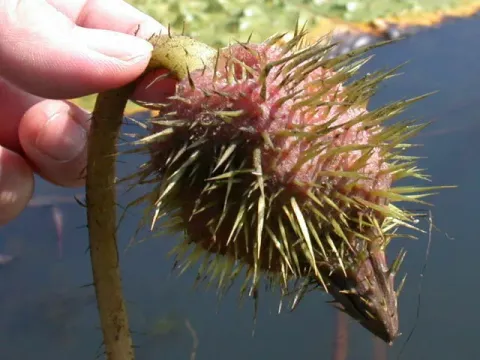
Euryale
Euryale
Sowing of Euryale seeds typically occurs in the spring when water temperatures consistently reach 15–20 degrees Celsius, ensuring optimal germination rates.
What the section contains

Euryale
Seeds should be planted in nutrient-rich silt at a depth of approximately 15 centimeters to prevent them from being displaced by minor water currents.
For efficient production, many farmers prefer to pre-germinate seeds in controlled nursery environments before transferring them to larger water bodies.
Proper spacing is essential, as the mature leaves of this plant can span several meters, necessitating enough surface area for each plant to receive sunlight.
Consistent water management is required immediately after sowing to protect the delicate seedlings from temperature fluctuations or mechanical damage.
As a member of the Nymphaeaceae family, Euryale requires warm, shallow, and slow-moving or stagnant water bodies to thrive successfully throughout the season.
The plant demands a rich organic soil base, typically silt, which provides the necessary minerals and nutrients for its rapid vegetative development.
Abundant direct sunlight is crucial for the photosynthesis of its large floating leaves, making open water areas without overhead canopy the best locations.
Water quality must be maintained, as the plant is highly sensitive to chemical pollutants, heavy metal runoff, and excessive industrial wastewater contamination.
A stable water level is preferred, as rapid changes in depth can stress the root system and negatively impact the overall vigor of the aquatic crop.
The yield of Euryale is primarily determined by the quality and quantity of its seeds, which are highly valued in both culinary and traditional medicinal markets.
Yield performance is maximized in regions with long, hot summers, as this allows the plant to complete its full life cycle and produce mature, nutrient-dense fruits.
Implementing targeted organic fertilization within the substrate of the pond can significantly enhance the development of seed pods and increase total production.
Harvest density should be managed carefully; too many plants in a single area may result in smaller fruit sizes and a lower overall quality of the harvested seeds.
Post-harvest processing, including cleaning and sorting, is a significant component of the final yield value, ensuring the product meets market standards.
Fungal infections are the most common threat to Euryale, often manifesting as leaf spot or rot when water circulation is poor or humidity is excessively high.
Various aquatic insect larvae can damage the underside of the leaves or young stems, potentially stunting the growth and reducing the plant's overall vitality.
Competition from invasive algae or overly dense aquatic weeds can limit the plant's access to light and nutrients, necessitating regular pond cleaning.
Freshwater mollusks may graze on the young, tender parts of the plant, requiring integrated pest management strategies to protect the integrity of the crop.
Proactive monitoring and the removal of infected plant tissues are essential agronomic practices to prevent the spread of diseases within a confined water body.
Harvesting usually takes place toward the end of the growing season when the fruits mature and naturally submerge to the bottom of the pond.
Workers use specialized tools or manual techniques to gather the submerged fruits from the silt, requiring great care to preserve the seeds inside.
Once gathered, the fruits undergo a thorough cleaning process to strip away the thorny outer husk, often involving soaking and mechanical brushing.
The recovered seeds must be washed thoroughly to remove all organic debris before being prepared for the drying process to ensure longevity and shelf-life.
Final drying is conducted in sunlight or climate-controlled facilities to achieve the desired moisture content, making the seeds ready for commercial distribution.