
Tricuspid eyebright
Euphrasia tricuspidata
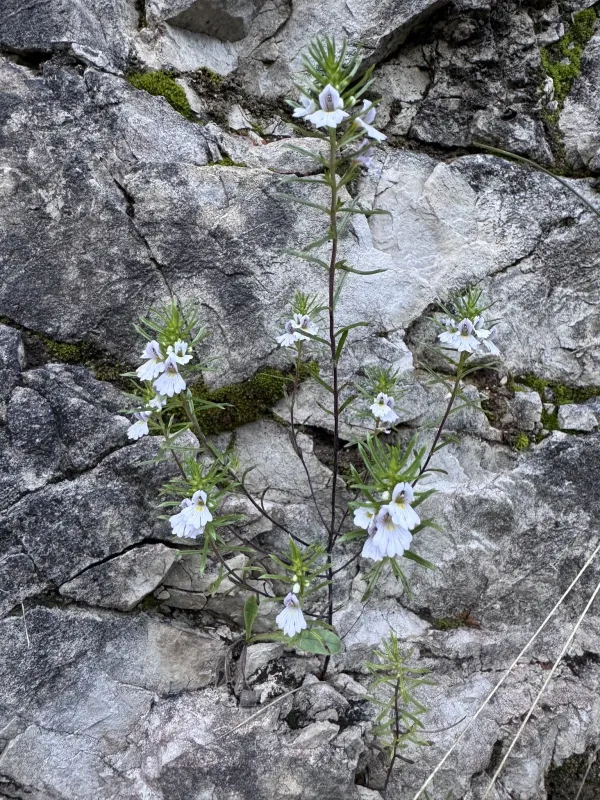
Description
Growing requirements
Tricuspid eyebright (Euphrasia tricuspidata) is an annual herbaceous plant categorized within the Orobanchaceae family. It is distinct for its hemiparasitic lifestyle, meaning it relies on establishing root connections with host plants to supplement its water and nutrient uptake.
The species is native to mountainous regions across Europe, typically thriving in limestone-rich grasslands and open, stony habitats. It is highly adapted to temperate climates, preferring locations with high solar irradiance and sufficient soil drainage.
Growing this plant requires specific soil conditions, specifically a neutral to alkaline pH level. Because it is a root hemiparasite, successful cultivation depends entirely on the presence of suitable host grasses. Without a robust host population, the development of the eyebright is significantly stunted.
Agricultural management is unconventional due to the plant's parasitic dependency. Instead of traditional monoculture, eyebright must be integrated into diverse grassland mixtures where its roots can penetrate those of nearby perennial grasses to access nutrients.
The plant is mainly harvested for its medicinal value. Historically, it has been used in herbal medicine due to its potent anti-inflammatory properties, specifically targeting ocular health and irritation, leading to interest in its sustainable agricultural production.
Main diseases and pests
The primary threats to Euphrasia tricuspidata involve the health of its host plants. If the supporting grass species are attacked by fungi or pests, the hemiparasite suffers immediate physiological stress and a subsequent decline in biomass production.
Excessive soil moisture is a critical environmental threat. Waterlogging significantly increases the risk of root rot, which is often fatal for this species, particularly because the root-parasite interface is highly susceptible to anaerobic conditions.
Pests such as aphids and spider mites can infest the foliage, reducing the overall yield and vitality. Since the product is intended for medical use, chemical pest control must be avoided, making biological management and careful ecosystem monitoring essential.
Invasive weeds pose a significant competition risk. Being a relatively small and slow-growing plant, eyebright can be easily shaded out or outcompeted by taller, more aggressive opportunistic weeds that thrive in nutrient-rich conditions.
To maintain a healthy crop, growers should focus on maintaining a balanced soil fertility profile. Over-fertilization, especially with nitrogen, encourages vigorous weed growth that suppresses the eyebright, while also negatively affecting the plant's unique biochemical profile.