
Alpine eyebright
Euphrasia alpina
Description
Growing requirements
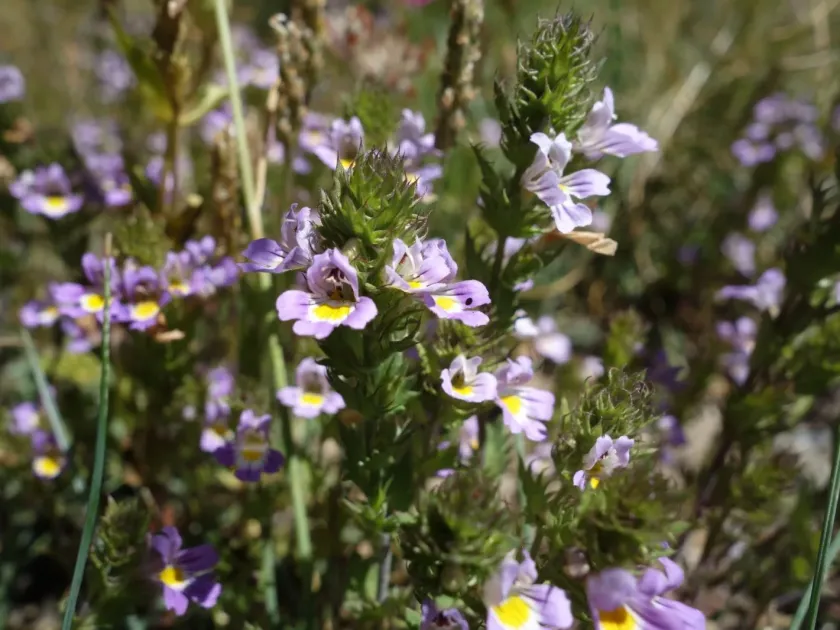
Alpine eyebright (Euphrasia alpina) is an annual herbaceous plant belonging to the Orobanchaceae family. It is distinct due to its semi-parasitic nature, relying on the root systems of surrounding host plants, typically grasses, to supplement its nutrient uptake.
The native range of this species is confined to high-altitude mountainous regions of Europe, including the Alps and Pyrenees. It is highly adapted to cool climates, alpine meadows, and stony substrates where the atmospheric humidity remains elevated.
Successful cultivation requires soil that is moist, well-draining, and moderately fertile. The species is highly sensitive to drought and direct, intense sunlight, which can quickly desiccate the foliage and inhibit photosynthesis.
A crucial factor for the growth of Euphrasia alpina is the proximity of compatible host plants. Without attaching its haustoria to the roots of a donor plant, the eyebright will fail to thrive and usually dies before reaching the flowering stage.
Agricultural practices for this crop focus on mimicking natural alpine environments. Maintaining a stable ecological balance on the site is essential, as the presence of a healthy grass community is a prerequisite for the viability of the eyebright.
Harvesting
The harvesting process takes place during the peak flowering stage, which ensures the highest concentration of pharmacologically active compounds, such as aucubin, flavonoids, and essential tannins, within the plant tissue.
Harvesters typically cut the aerial parts of the plant, leaving the root system intact to ensure the survival of the host plants and the potential for natural reseeding in the next season. The stems are usually harvested manually using simple tools.
Immediately after harvest, the material is moved to a drying facility. Proper drying is achieved in shaded, well-ventilated areas or specialized temperature-controlled dryers, keeping the heat strictly below 40 degrees Celsius to prevent degradation.
The primary use for Alpine eyebright is within the ophthalmic industry. Extracts from the plant are valued for their anti-inflammatory properties and are commonly used in traditional and modern medicine to treat ocular fatigue and minor eye irritation.
Once dried and processed, the material is stored in airtight containers to protect it from moisture and light exposure. When stored under ideal conditions, the raw herbal material remains chemically stable and effective for medicinal use for up to two years.