
Euphrasia christii
Euphrasia christii
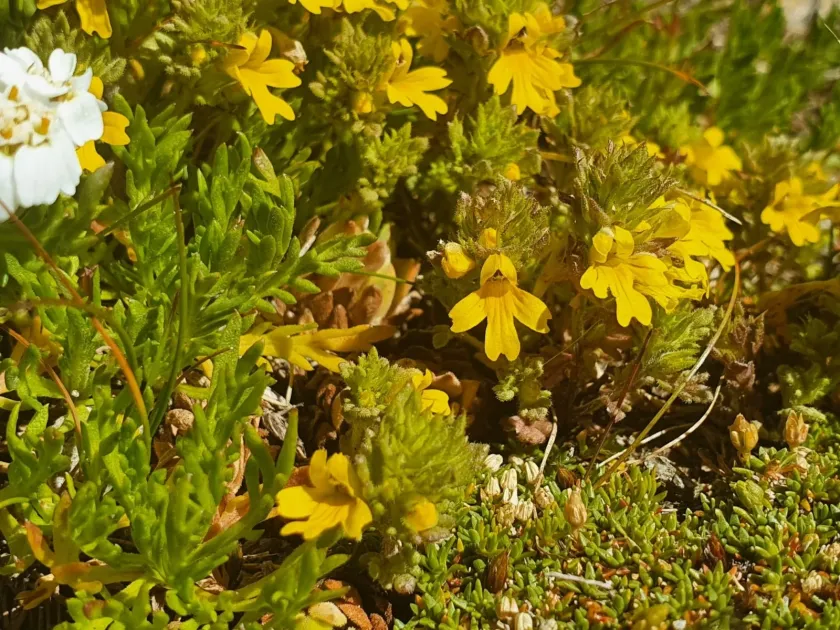
Description
Growing requirements
Euphrasia christii is a botanical species belonging to the family Orobanchaceae. This herbaceous annual is recognized as a facultative hemiparasite, meaning it can survive independently but thrives better by attaching to host roots.
The plant originates from mountainous regions within Europe. Its natural distribution is characterized by high-altitude meadows and rocky slopes where environmental conditions are demanding.
Botanically, it features specialized structures known as haustoria. These allow the plant to penetrate the roots of nearby grasses, extracting water and nutrients to supplement its own photosynthetic activity.
Successful cultivation requires well-drained, nutrient-poor, and neutral soil profiles. It does not tolerate high nitrogen levels, as excess nutrients can disrupt its parasitic relationship with host species.
The species prefers cool to moderate climates and high solar radiation levels. It is highly resilient to temperature fluctuations, making it well-adapted to alpine and sub-alpine environments.
Main diseases and pests
Fungal diseases, particularly powdery mildew, are common threats when the plant is grown in environments with poor air circulation and excessive humidity levels.
Various sap-sucking insects, including aphids and spider mites, pose significant challenges. These pests can severely weaken the plant by draining essential sap from the stems and leaves.
Root rot represents a physiological risk, usually triggered by waterlogged soil conditions. Proper drainage is essential to prevent these infections in the root zone.
The dependence on host plants makes the management of Euphrasia christii complex. If the host plants suffer from environmental stress or competition, the health of the Euphrasia population declines accordingly.
Integrated pest management strategies should focus on maintaining a healthy ecosystem balance, avoiding chemical interventions that might be toxic to the essential host vegetation.