
Arctic eyebright
Euphrasia arctica
Description
Growing requirements
Arctic eyebright (Euphrasia arctica) belongs to the Orobanchaceae family. As a hemiparasitic species, it maintains a unique relationship with its environment by attaching its roots to the root systems of surrounding host plants to supplement its nutritional intake.
The distribution of this species is largely confined to the Arctic and Subarctic regions. It is typically found in tundra landscapes, open meadows, and areas where moisture levels remain high throughout the short growing season characteristic of northern latitudes.
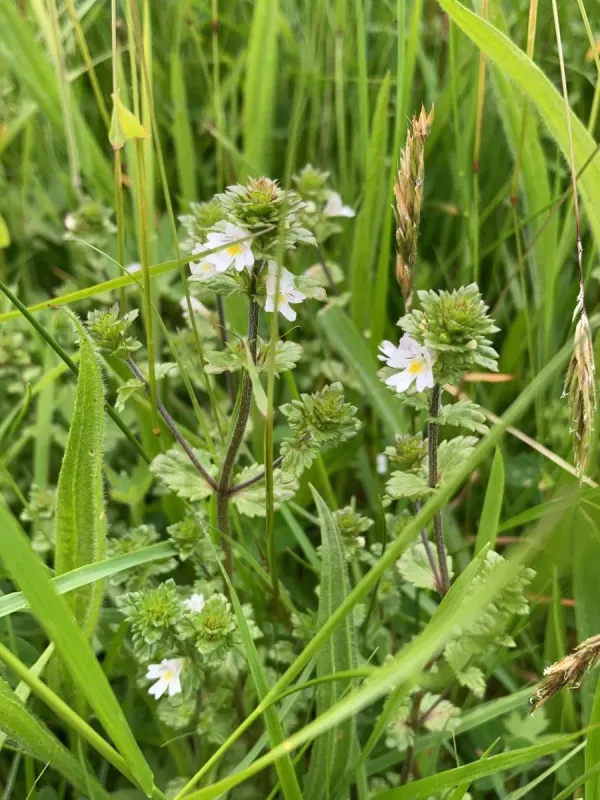
Botanically, the plant is characterized by its small, erect stem and opposite leaves with serrated margins. The flowers are relatively small, often displaying white to violet hues with yellow markings, which serve as visual cues for arctic pollinators.
Regarding soil requirements, the species thrives in moist, acidic to neutral soil types. Unlike fully autotrophic plants, its growth depends more on the density and health of the surrounding vegetation, which acts as the nutrient reservoir for its parasitic development.
Climate tolerance is the defining feature of this species. It has evolved to survive extreme temperature fluctuations, including frost and ice, while maximizing its reproductive success during the brief window of the arctic summer.
Main diseases and pests
Environmental stressors represent the primary threat to the stability of Arctic eyebright. The loss of stable host plant populations due to land development or habitat fragmentation directly threatens its survival.
Fungal pathogens represent a concern in areas with excessive soil moisture. Root and stem rots can rapidly deplete the plant's resources, especially when the host plant is also suffering from environmental stress or drought.
While the plant produces chemical compounds that deter many generalist herbivores, local insect populations can still cause significant damage during the flowering stage, potentially reducing the overall seed output for the next cycle.
Climate-induced shifts in ecosystem dynamics remain the most critical long-term threat, as changes in the availability of host plants could lead to a decline in its population densities across its traditional range.
As this species is not currently cultivated on an agricultural scale, there are no established commercial pest or disease control protocols, focusing conservation efforts primarily on protecting its natural habitats.