
Euphrasia stricta
Euphrasia stricta
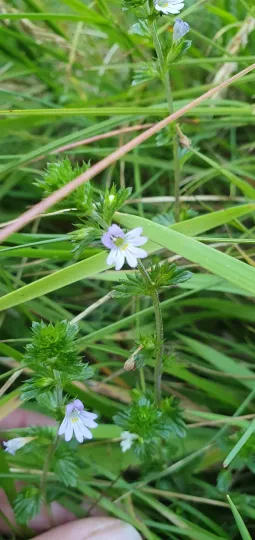
Description
Sowing dates
Euphrasia stricta is an annual hemiparasitic herb, meaning its propagation is strictly dependent on the availability of host plants. Seeds are extremely small and possess a limited nutrient reserve, requiring immediate access to a host root system upon germination.
The optimal sowing time is late autumn, allowing the seeds to undergo natural stratification throughout the winter. This cold treatment is essential for breaking seed dormancy and ensuring uniform emergence during the following spring.
Seeds should be broadcasted over the surface of well-maintained meadows or grasslands. Covering them with a thin layer of soil or sand is beneficial, as deep burial prevents the seedlings from accessing necessary light and host interaction.
To establish a successful population, Euphrasia stricta should be sown into existing grass cover. The host plants, typically species within the Poaceae family, provide the necessary physiological support for the eyebright to thrive during its growth cycle.
Care must be taken to ensure the seeding rate is not excessive. Overcrowding can limit access to light and host roots, leading to high seedling mortality. A balanced ecosystem approach is required for sustainable cultivation.
Growing requirements
Classified under the Orobanchaceae family, this species functions as a facultative hemiparasite. It utilizes specialized root structures called haustoria to extract water and inorganic nutrients from the xylem of various host plant roots.
The plant thrives in moderately moist, well-drained soils with a near-neutral pH level. It does not tolerate waterlogged conditions or high acidity, which restrict the activity of both the plant itself and its primary host species.
Light availability is the most critical environmental factor. As a sun-loving species, it requires direct exposure to sunlight throughout the day. Excessive shading by tall weeds or dense canopy coverage will invariably result in stunted development.
Climatic requirements are specific to temperate regions with moderate precipitation. While the plant exhibits some winter hardiness, the growth phase requires consistent temperature levels to support photosynthesis and effective haustorial connection.
Agricultural management should prioritize the preservation of a semi-open habitat. The use of chemical inputs, particularly fertilizers and herbicides, must be avoided, as these practices are detrimental to the plant's delicate hemiparasitic lifestyle.
Yield
Yield estimation for Euphrasia stricta is based on the harvested dry biomass of the aerial parts. Because it is rarely grown as a monocrop, production levels are inherently linked to the total surface area and the density of host plants available.
Under optimal conditions, the harvest can reach approximately 200 to 400 kilograms of dry matter per hectare. Variability is high, and yield is often secondary to the purity and quality of the medicinal material obtained.
Quality parameters, such as the concentration of secondary metabolites like iridoid glycosides and flavonoids, determine the market value. These levels peak during the full flowering stage, which is the primary indicator for timing the harvest.
Intensive harvesting methods are generally not applicable to this species due to its small stature and fragmented growth patterns. Consequently, labor-intensive manual harvesting remains the standard for high-quality botanical production.
Yield stability is heavily influenced by seasonal weather patterns. Years with balanced moisture and sunlight favor higher biomass accumulation, while erratic weather during the vegetative stage can lead to premature senescence.
Main diseases and pests
Euphrasia stricta typically displays high resilience to many common agricultural pests. Its specialized lifestyle and preference for low-density habitats protect it from the rapid spread of pathogens found in traditional intensive farming.
Fungal infections, such as powdery mildew, may occur in high-humidity microclimates with stagnant air. Maintaining proper air circulation by managing the height of the surrounding grassland is an effective preventative measure.
Leaf-feeding insects, including specific lepidopteran larvae, can damage the foliage during the peak growing season. While usually not fatal to the plant, significant herbivory reduces the overall quality of the harvestable material.
The primary threat to population survival is competitive exclusion by taller, faster-growing weed species. If the host vegetation becomes too dense or is overgrown by invasive plants, the eyebright will be shaded out and eventually die.
Strategic grazing or occasional mowing is necessary to maintain the balance of the grassland habitat. This prevents the encroachment of competitive species while providing enough light and space for the eyebright to complete its life cycle.
Harvesting
The harvesting process requires precise manual work to collect the aerial parts without damaging the underlying sod or root systems. This is usually carried out during the height of the flowering period in mid-summer.
Collectors should use sharp implements to cut the stems, leaving at least 5-10 centimeters of growth above the soil. Maintaining the integrity of the host plant roots ensures the survival of the site for future natural regeneration.
Post-harvest management involves immediate removal to a processing area. Freshly cut material is susceptible to rapid moisture loss or, conversely, rapid spoilage if left in tight, non-ventilated piles.
Drying must be conducted in the shade with constant airflow. Exposure to direct sunlight degrades the chemical constituents responsible for the plant's traditional medicinal properties, rendering the final product less effective.
Once dried, the herb should be stored in breathable, dry containers. Shelf life is limited, necessitating annual turnover of stock to ensure that the material provided to the market remains fresh and potent.