
Euphrasia picta
Euphrasia picta
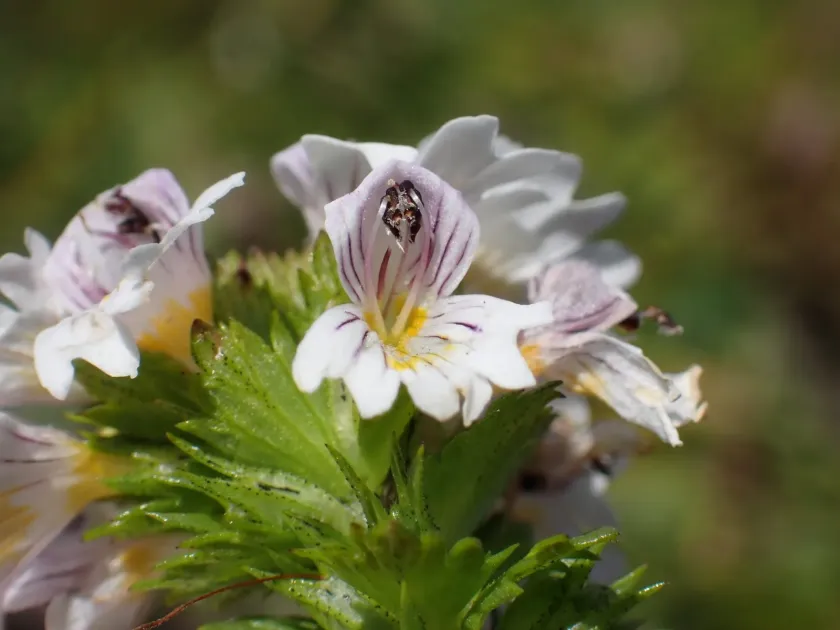
Description
Growing requirements
Euphrasia picta is a herbaceous annual plant belonging to the Orobanchaceae family. It is widely recognized by botanists for its distinct aesthetic features and its classification as a hemiparasite.
The plant functions by developing haustoria, which are specialized root structures that penetrate the roots of host plants. This allows Euphrasia picta to extract essential water and dissolved minerals from its neighbors while performing photosynthesis.
The species is primarily native to European alpine regions. It thrives in high-altitude environments where the terrain is rocky and the soil is nutrient-poor, allowing it to compete effectively in specialized niches.
Optimal growth conditions require well-drained, lime-rich soils. The plant is highly sensitive to soil composition and does not tolerate high nitrogen levels, which typically lead to the dominance of more aggressive species.
Historically, the genus Euphrasia has been used in traditional folk medicine for eye treatments. While Euphrasia picta is less common in agricultural production, it remains a focal point for biodiversity studies in mountain ecosystems.
Main diseases and pests
Habitat fragmentation remains the primary threat to the stability of Euphrasia picta populations. When the diverse meadow ecosystem is disturbed, the loss of host plants directly impacts the survival rate of the parasite.
Fungal pathogens represent a significant risk during seasons with high precipitation. Excessive soil moisture leads to root rotting, which is often fatal given the plant's reliance on specific host associations.
Climate change poses a long-term threat as shifting temperature gradients alter the bloom timing. This can lead to a mismatch between the plant's reproductive cycle and the activity of its natural pollinators.
Invasive plant species are a constant danger as they alter the microclimate and light availability. The delicate balance required for the hemiparasitic connection is easily disrupted by more vigorous competitors.
Strict conservation measures are needed to prevent population decline. Limiting agricultural encroachment and preventing nitrogen leaching from nearby farms are essential steps for protecting this unique alpine herb.