
Euphrasia nemorosa
Euphrasia nemorosa
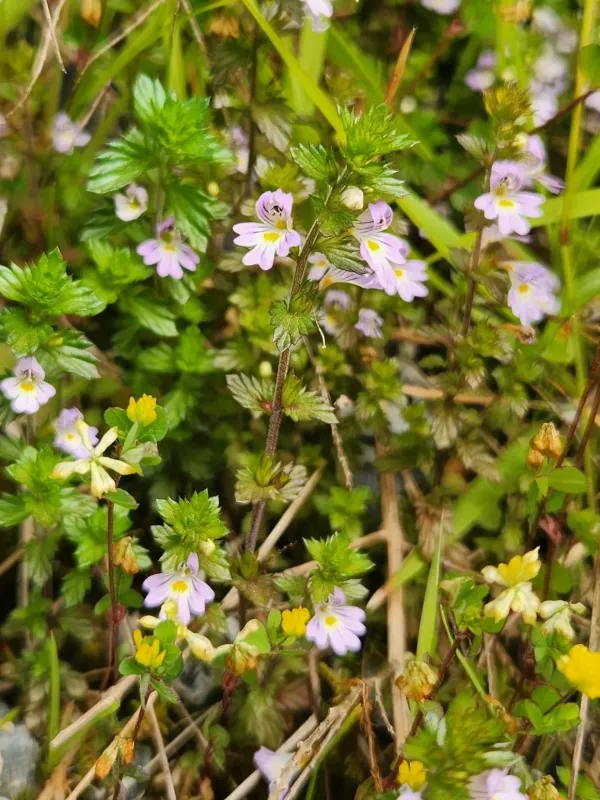
Description
Sowing dates
Euphrasia nemorosa is an annual hemiparasitic herb belonging to the Orobanchaceae family, typically found in diverse grassland and woodland habitats.
The seeds require a period of cold stratification to break dormancy, making autumn sowing the most effective method for successful propagation in temperate regions.
When sowing, it is essential to place the seeds on or very near the surface of the soil, as they require light exposure to trigger germination.
Successful cultivation depends on the proximity of suitable host plants, as Euphrasia relies on its root system to attach to hosts via haustoria for water and nutrients.
Seedlings are delicate and should be sown in areas where they will not be overshadowed by fast-growing, dense vegetation during their early developmental stages.
Growing requirements
This species thrives in well-drained, moderately moist soils with a near-neutral to slightly acidic pH, often found in semi-open environmental niches.
Euphrasia nemorosa performs best in sunny or partially shaded conditions, avoiding locations with stagnant water that could lead to root system degradation.
Avoid applying synthetic fertilizers, especially high-nitrogen compounds, as the plant obtains its nutrients through a parasitic relationship rather than directly from soil chemistry.
Climate adaptability is high for this plant, as it is native to regions with distinct seasons, allowing it to withstand the natural fluctuations in temperature.
Maintaining a stable balance between the host population and the Euphrasia density is key to ensuring consistent and healthy crop growth.
Main diseases and pests
Root rot is the primary physiological threat to this crop, often occurring when the soil remains waterlogged for extended periods during the growing season.
Insects like leaf-mining larvae and aphids can occasionally damage the foliage, leading to reduced photosynthetic efficiency and diminished chemical yield.
Powdery mildew represents a significant fungal challenge, particularly in humid, still environments where airflow is insufficient to dry the plant canopy.
If the host plant species are suppressed by weeds or other environmental stressors, the Euphrasia population will likely decline due to nutrient deprivation.
Proper field management, including the prevention of overcrowding, is crucial to mitigate the risks of disease transmission within the cultivated population.
Harvesting
The harvesting process begins at peak flowering, which is the period when the concentrations of flavonoids and iridoid glycosides are at their highest.
Using hand shears, the aerial parts of the plant are harvested, ensuring that enough plant material remains to allow for seed dispersal and next season's growth.
Drying should take place immediately after harvest in a dark, airy room to prevent the plant material from losing its color and medicinal efficacy.
The dried herbs should be stored in airtight, moisture-proof containers to preserve their quality and prevent the degradation of bioactive components.
Careful sorting is required during the collection process to ensure that only the target species is gathered, avoiding contamination with similar field weeds.