
Dwarf eyebright
Euphrasia nana
Description
Growing requirements
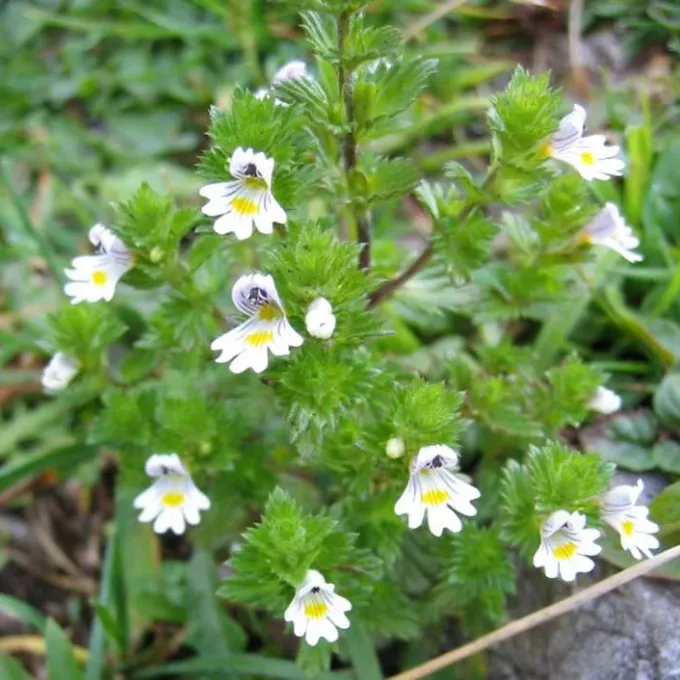
Dwarf eyebright (Euphrasia nana) belongs to the Orobanchaceae family and is recognized as a semi-parasitic herbaceous plant. It is primarily found in alpine habitats and mountainous regions with rocky soil.
The biological nature of this plant involves photosynthesis combined with the ability to attach its roots to the root systems of neighboring grasses, extracting necessary water and minerals.
This species requires specific environmental conditions, including high levels of solar radiation, well-drained soil, and a climate characteristic of high-altitude alpine meadows.
Cultivating Euphrasia nana as a traditional crop is impractical, as the plant relies entirely on the presence of compatible host species within its immediate soil environment.
In terms of economic utility, this plant is valued for its phytochemical composition, which is used in traditional medicine to support eye health and treat minor ocular inflammations.
Main diseases and pests
The most significant threat to Euphrasia nana is the loss of host biodiversity, as the plant cannot survive in a monoculture environment or where host species are depleted.
Pathogenic fungi pose a risk to the plant's health, particularly during periods of excessive rainfall or poor soil drainage, leading to stem and root rot symptoms.
Common insect pests, including aphids, may infest the foliage, impacting the plant's ability to maintain its semi-parasitic connection by reducing photosynthetic capacity.
Environmental stress, such as soil compaction or rapid changes in land use, can negatively affect the plant's ability to propagate and maintain its niche.
Effective management and protection of this plant require maintaining natural habitats rather than traditional agricultural pesticide applications, which could harm the surrounding ecosystem.