
Small-flowered eyebright
Euphrasia micrantha
Description
Growing requirements
Euphrasia micrantha, commonly known as the small-flowered eyebright, is a distinct annual plant species within the Orobanchaceae family. Unlike fully autotrophic plants, it functions as a hemiparasite, forming haustorial connections with roots of neighboring species to obtain necessary nutrients and water.
The distribution of this species is largely centered in Western and Northern Europe, particularly in moist heaths and nutrient-poor grasslands. It is highly adapted to environments where competition from taller, more vigorous vegetation is naturally suppressed by soil conditions.
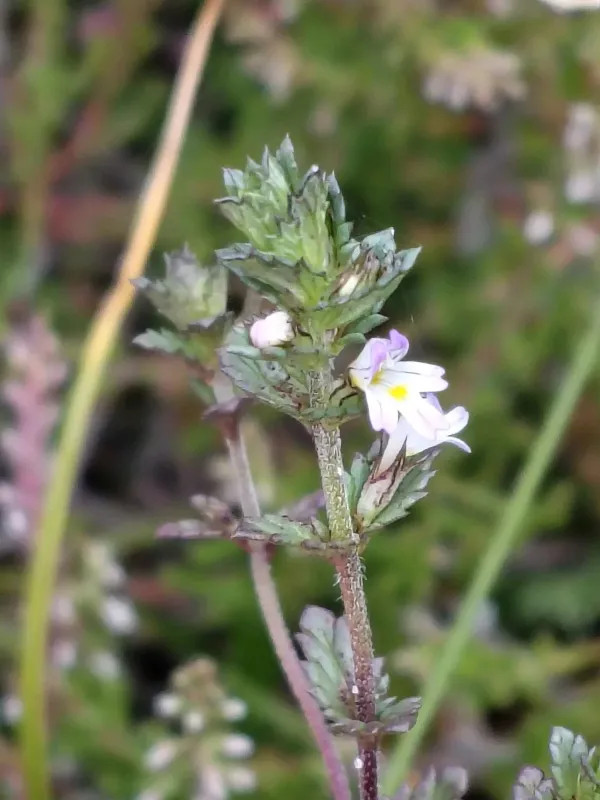
Botanically, the plant is characterized by its small, inconspicuous flowers which are typically white or pale lilac. The vegetative structure is generally slender, with a height ranging from 5 to 20 cm, featuring serrated leaves arranged in pairs along the stem.
Ecological requirements for Euphrasia micrantha involve a need for open, light-exposed habitats with stable moisture levels. Excessive nitrogen availability in the soil is detrimental to the species, as it favors competitive plant growth, leading to the exclusion of the eyebright.
The agricultural and economic significance of the species is rooted in its use in herbal medicine. Specifically, it is harvested for its active compounds, which are known to be effective in treating ocular inflammation, conjunctivitis, and general eye fatigue symptoms.
Main diseases and pests
The primary threats to Euphrasia micrantha include habitat loss and fragmentation caused by urbanization and changing land management practices. Intensive agricultural practices, such as heavy fertilizing and drainage of wetlands, significantly threaten the survival of local populations.
Pathogenic fungi can pose a risk during exceptionally wet seasons, potentially causing root or stem rot. Furthermore, herbivory by certain invertebrate species can suppress the population's reproductive capacity, particularly in years with low overall plant density.