
Euphrasia marchesettii
Euphrasia marchesettii
Description
Growing requirements
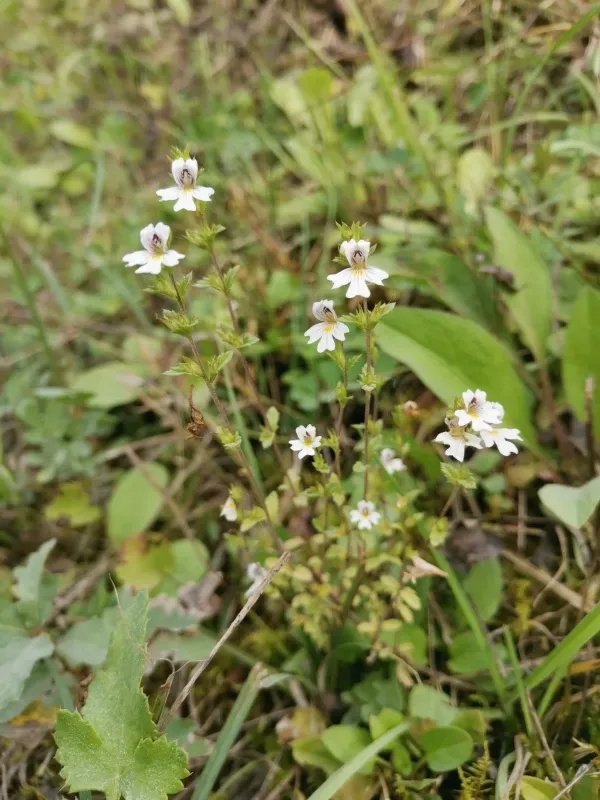
Euphrasia marchesettii is a herbaceous hemiparasitic plant species belonging to the Orobanchaceae family. Unlike common crops, this plant is recognized primarily for its botanical rarity and its specific role within stable meadow ecosystems in Central and Southeastern Europe.
The plant's natural habitat is restricted to specific humid grassland environments. It relies on a hemiparasitic strategy, utilizing specialized root structures known as haustoria to extract water and essential nutrients from the roots of neighboring plant species.
Morphologically, the plant features an upright stem and simple, opposite leaves, typical of the Euphrasia genus. Its growth cycle is strictly tied to the seasonal availability of nutrients and water provided by its host plants, which makes it highly sensitive to changes in the composition of its surrounding vegetation.
Regarding soil requirements, the species prefers well-drained, nutrient-poor soils with a neutral or slightly alkaline pH. Excessive fertilization or soil compaction negatively impacts the plant's ability to establish its haustorial connections, leading to a rapid decline in population density.
While not a subject of agricultural cultivation in the traditional sense, understanding the biology of Euphrasia marchesettii is crucial for conservation efforts. It serves as an indicator species for biodiversity monitoring in native meadows and has no direct industrial applications.