
Illyrian eyebright
Euphrasia illyrica
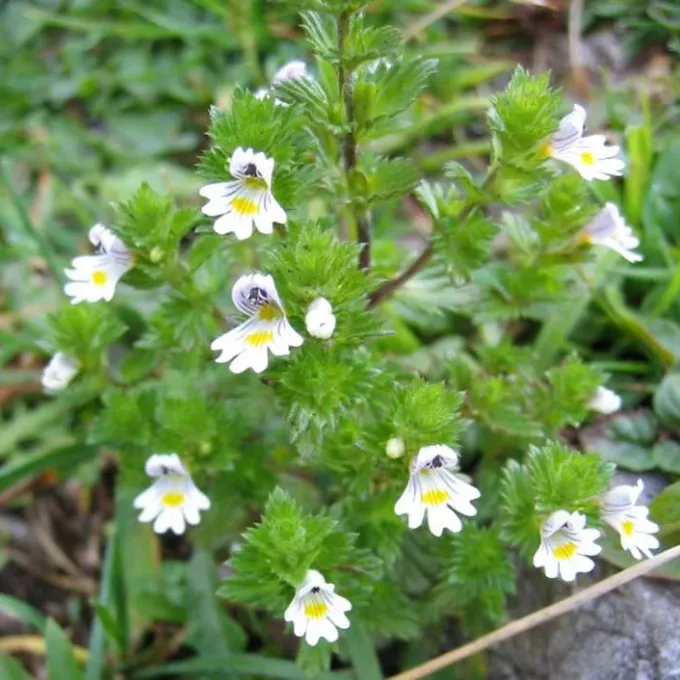
Description
Growing requirements
Illyrian eyebright (Euphrasia illyrica) is a semi-parasitic annual herbaceous plant belonging to the Orobanchaceae family. In the wild, it is primarily found in the Balkan Peninsula, preferring well-lit mountain meadows and dry, stony slopes.
Successful cultivation of this species requires specific conditions that mimic its natural habitat. The most critical requirement is the presence of host plants, to which the eyebright attaches via haustoria to absorb nutrients and water from their roots.
The crop prefers moderately fertile, loose, and well-drained soils with a neutral to slightly alkaline pH. Excessive moisture is detrimental to the root system, making proper water management and drainage on the site essential for survival.
Illyrian eyebright is a light-loving plant that does not tolerate shade. From an agrotechnical perspective, it is best grown in open spaces where it can receive direct sunlight throughout the entire daylight period for optimal growth.
The ideal temperature range for vegetation is between +15 and +22 degrees Celsius. During periods of extreme heat and drought, the plant tends to stop growing and enters the flowering phase prematurely, which significantly reduces the total biomass yield.
Harvesting
The commercial utility of eyebright is based on the biological activity of its aerial parts, which contain aucubin, flavonoids, and various tannins. Traditionally, the dried herb is used in ophthalmology and herbal medicine to produce supplements that support eye health and soothe ocular tissues.