
Euphrasia hirtella
Euphrasia hirtella
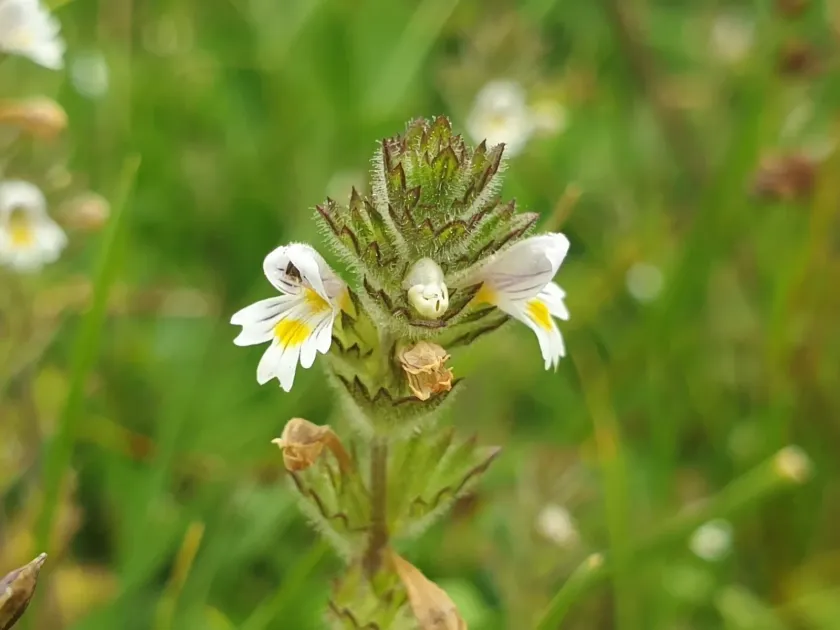
Description
Sowing dates
Euphrasia hirtella is a fascinating annual plant belonging to the Orobanchaceae family. As a hemiparasite, it possesses a unique biological feature: it requires physical attachment to the roots of host plants, typically grasses, to obtain water and mineral nutrients.
The sowing process is best conducted in early spring, following the final frosts. The seeds are extremely small and need cold stratification for optimal germination, making late autumn or very early spring the ideal time for sowing.
Seeds should be scattered on the soil surface or covered with a very thin layer of substrate. It is crucial to ensure that the area has a healthy population of grass species to act as hosts for the developing Euphrasia seedlings.
In cultivation, one must maintain a delicate balance between the host plants and the target crop. Excessive density of host plants may shade the Euphrasia, while too little density will result in stunted growth due to lack of nutrients.
The plant grows relatively slowly, and successful establishment is highly dependent on the presence of compatible host roots in the immediate rhizosphere.
Growing requirements
Euphrasia hirtella thrives in open, sunny environments such as meadows and forest glades. It is highly sensitive to moisture levels and requires consistently damp, but well-drained soil to support its photosynthetic and parasitic activities.
The soil should have a neutral pH and be moderately fertile. While the plant derives some nutrition from its host, it still requires proper light exposure for its own chlorophyll-bearing leaves to function efficiently.
Climate-wise, it prefers regions with moderate temperatures and stable humidity. Heatwaves and prolonged droughts are detrimental to the plant, often causing it to wither and die before it can produce viable seeds.
Agrotechnical management is minimal but requires careful attention to the root ecosystem. Avoid deep tilling or synthetic fertilizers, as these disrupt the symbiotic-parasitic balance and can kill the delicate root connections.
Due to its specialized requirements, Euphrasia hirtella is rarely grown in large commercial fields and is instead found in managed wild-harvesting plots or specialized botanical gardens.
Harvesting
The harvest period is limited to the peak flowering season, typically during the summer months. Harvesting at this time ensures the highest concentration of active compounds, including iridoid glycosides and flavonoids.
To harvest properly, collectors should snip the flowering stems above the root line. Removing the roots will permanently destroy the population in that area, so sustainable harvesting practices are essential for long-term viability.
Post-harvest, the plants must be dried in a dark, airy place. Exposure to direct sunlight or high temperatures during the drying phase will cause the decomposition of sensitive chemical compounds.
Once dried, the herb is stored in opaque, airtight containers to protect it from moisture and degradation. It is widely recognized for its traditional uses in supporting ocular health and relieving minor inflammation.
The final product is usually used in the preparation of tinctures, teas, or extracts, making it a valuable resource in the specialized sector of herbal pharmacology.