
Himalayan eyebright
Euphrasia himalayica
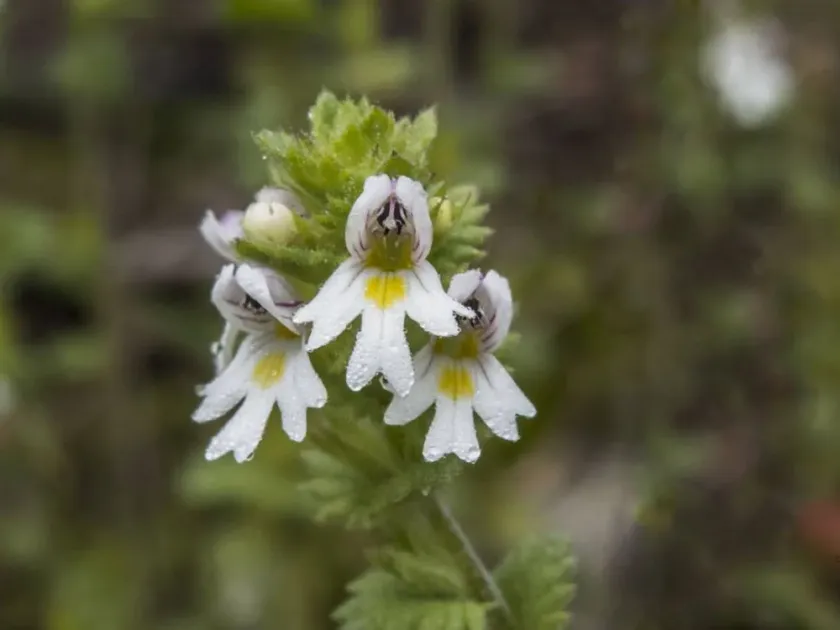
Description
Sowing dates
Himalayan eyebright is an annual hemiparasitic plant that typically requires a winter sowing cycle in outdoor conditions.
Seeds need natural stratification, making autumn sowing the most effective method for successful germination in early spring.
The sowing depth must be kept very shallow, as the small seeds rely on light exposure to initiate their metabolic growth.
A crucial agronomical aspect is to ensure that seeds are sown in proximity to suitable host grasses for their survival.
The seeding density is adjusted to maintain the balance between the host plants and the parasitic eyebright populations.
Growing requirements
The plant thrives in well-drained, nutrient-poor soils, avoiding regions with excessive fertilization or heavy loam components.
A cool, high-altitude climate is essential, as high temperatures often lead to heat stress and developmental issues in the species.
Adequate soil moisture is required, but it must be balanced with high drainage to prevent rot in the root system.
The presence of host plants is a mandatory requirement for the plant to derive essential minerals via its haustoria.
Exposure to direct sunlight is generally preferred to maintain vigor, though it can tolerate partial shade in warmer southern aspects.
Main diseases and pests
The primary threats include fungal pathogens such as root and stem rots which develop under high humidity conditions.
Mildew can become an issue if the planting area is too crowded or if there is insufficient air movement between plants.
Pests like aphids and spider mites are common in dry conditions, requiring careful monitoring to avoid chemical interference.
Nematode infestations can potentially cause damage to the host plant roots, indirectly affecting the health of the eyebright.
Over-compaction of the soil can lead to anaerobic conditions, increasing the risk of plant loss during the active growing season.
Harvesting
Harvesting is performed during the peak flowering stage to capture the highest density of medicinal alkaloids and compounds.
The aerial parts of the plant are carefully clipped, ensuring that the host grass remains largely undisturbed during the process.
Drying is conducted in cool, shaded environments to preserve the active properties and prevent the chemical degradation of the herb.
Once dried, the plant material must be stored in airtight, moisture-free containers to maintain long-term shelf stability.
Seed harvesting is conducted post-flowering by shaking the capsules, ensuring the seeds are fully mature before collection.