
Euphrasia grandiflora
Euphrasia grandiflora
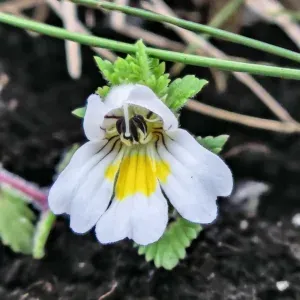
Description
Sowing dates
Seeds of Euphrasia grandiflora require a period of cold stratification to germinate successfully, reflecting their natural high-altitude evolutionary adaptations.
Direct sowing into the soil is typically performed during the autumn, allowing the seeds to undergo natural winter chilling cycles.
Integration with suitable host grasses, such as Festuca or Poa species, must be managed at the time of planting to ensure immediate parasitic establishment.
Given their minute size, the seeds should be sown on the surface or buried only a few millimeters deep to ensure adequate light exposure.
Maintaining consistent soil surface moisture is essential during the early weeks to support the germination and initial growth phase.
Growing requirements
Euphrasia grandiflora, commonly known as a type of eyebright, is a member of the Orobanchaceae family. It is distinct for its semi-parasitic lifestyle, allowing it to survive in various mountain ecosystems.
The plant relies on haustoria to attach itself to the roots of host grasses, from which it extracts essential nutrients and moisture throughout its life cycle.
It thrives in open, well-lit areas with thin, poor, and well-drained soils. Avoid areas with high nutrient content, as these can inhibit the natural development of the plant's parasitic mechanisms.
Temperature plays a crucial role in its development; the species is adapted to cooler climates and avoids hot, arid conditions.
Soil pH should generally remain neutral to slightly acidic, providing a balanced environment for both the host plants and the eyebright to coexist effectively.
Main diseases and pests
Fungal infections pose the primary threat to cultivated stands, especially during periods of high humidity and poor air circulation.
Powdery mildew is a frequent issue, particularly in late-season harvests, which can drastically reduce the biomass quality.
Root rot becomes a significant problem if soil drainage is compromised, leading to the rapid decay of the parasitic root system.
Pests such as aphids can cause damage during the flowering stage, potentially impacting the seed production potential of the crop.
Weed infestation is a major concern, as the slow-growing seedlings can easily be outcompeted and smothered by more aggressive plant species.