
Cold eyebright
Euphrasia frigida
Description
Growing requirements
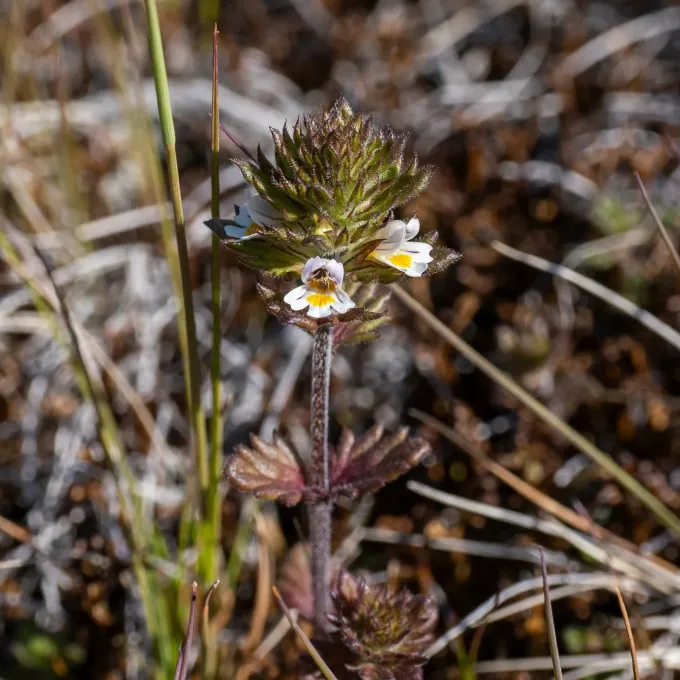
Cold eyebright (Euphrasia frigida) is a small herbaceous plant belonging to the Orobanchaceae family. Unlike many typical agricultural crops, this species is known for its hemiparasitic nature, meaning it relies on the root systems of host plants, such as grasses and sedges, to supplement its nutrient intake.
The distribution of Euphrasia frigida is primarily concentrated in the arctic and subarctic regions of the Northern Hemisphere. It is frequently found in tundra environments, alpine meadows, and stony scree slopes where other vegetation density is relatively low, allowing the plant to thrive without excessive shading.
Botanically, it features a low-growing structure with small, often serrated leaves and characteristic zygomorphic flowers. The flowering period is tightly synchronized with the brief arctic summer, during which the plant must complete its pollination and seed production cycle.
Regarding environmental requirements, cold eyebright demands high solar radiation and consistent moisture levels. It thrives in well-drained but not excessively dry soils, showing a preference for open landscapes where competition for nutrients and light remains manageable for its modest root system.
Economically, the plant is primarily valued for its traditional medicinal properties. It is often harvested in small quantities to be used in herbal preparations aimed at improving ocular health and treating minor eye inflammations, following ancient folk traditions practiced in northern territories.
Main diseases and pests
The most significant threats to Euphrasia frigida are related to shifting climatic patterns. As arctic environments experience warming, the encroachment of woody shrubs and faster-growing perennials poses a major risk by shading out this light-dependent semi-parasitic species.
Pathogenic threats include various fungal infections, such as powdery mildew, which can colonize the leaves during abnormally wet and stagnant weather conditions. These infections can drastically reduce the plant's ability to produce viable seeds before the winter season arrives.
Pests that target the plant include aphids and thrips. These insects feed on the sap, causing significant stress and physical deformation. While the cold climate naturally limits the proliferation of these pests, they remain a constant biological challenge in the plant's southern ranges.
Human activities represent another critical threat, particularly in regions where soil disturbance occurs. Any action that destroys the surrounding host plant population will effectively starve the cold eyebright, as it cannot survive independently without its primary nutrient sources.
Finally, over-collection for medicinal use, although currently rare due to the plant's remote habitat, could potentially threaten local populations if commercial interest grows without proper management or sustainability guidelines for wild harvesting.