
Blue eyebright
Euphrasia coerulea
Description
Growing requirements
Blue eyebright (Euphrasia coerulea) is a member of the Orobanchaceae family. It is an annual plant characterized by a semi-parasitic nature, which means it derives some of its nutrients and water from the roots of neighboring host plants via haustoria.
The native distribution of this species is largely confined to northern regions, including parts of the UK and Scandinavia. It typically inhabits lime-rich grasslands, upland heaths, and open, moist meadows where competition for light is not excessive.
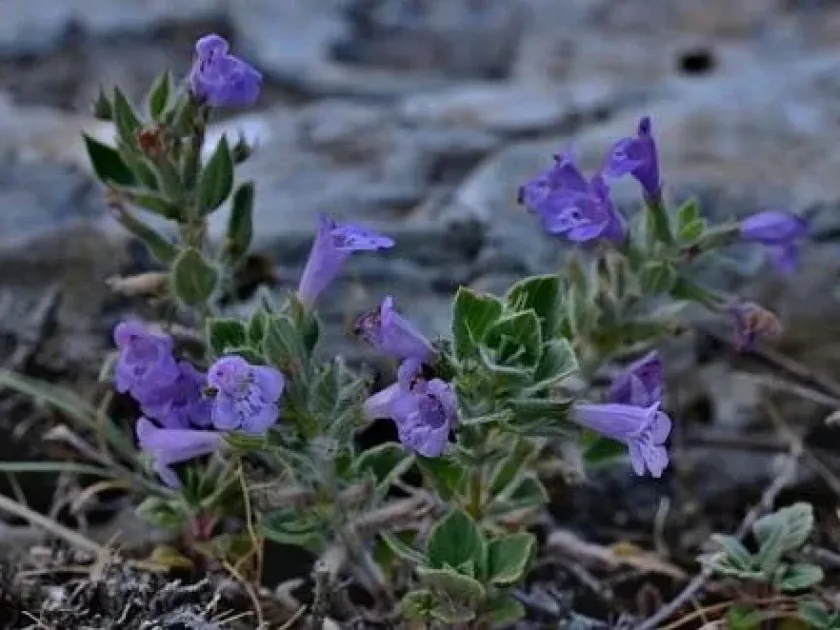
Botanically, Euphrasia coerulea displays small, opposite leaves and distinct blue to purplish flowers. Despite its semi-parasitic lifestyle, the plant remains capable of photosynthesis, though it relies on its host for essential soil-derived minerals and moisture.
The plant requires specific environmental conditions to thrive, preferring nutrient-poor soils and open, well-lit spaces. It is often negatively affected by nitrogen enrichment and intense agricultural interventions, which disrupt the ecological balance it depends upon.
This species is not cultivated for agricultural purposes and holds no commercial value as a crop. Its primary significance is scientific and conservation-oriented, as it serves as an indicator species for specific types of semi-natural grassland habitats that support biodiversity.