
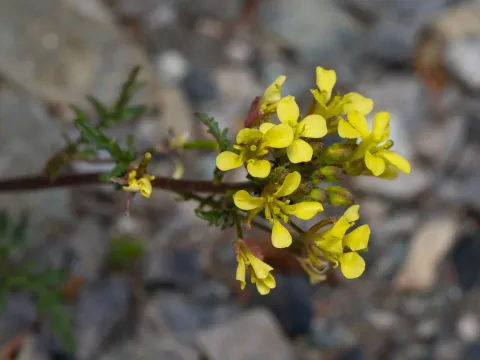
Erucastrum
Erucastrum
The sowing of Erucastrum is typically scheduled to optimize the vegetative development phase. Early spring sowing is preferred in temperate climates to take advantage of soil moisture levels before the onset of summer heat.
What the section contains

Erucastrum
For cover cropping purposes, Erucastrum can be planted after the harvest of primary cereals. This practice ensures that the soil remains covered during off-seasons, preventing erosion and leaching of essential nutrients.
Seedbed preparation should result in a fine, firm tilth. Since the seeds are small, shallow sowing at a depth of 1 to 2 centimeters is required to facilitate rapid emergence and prevent exhaustion of energy reserves.
A typical seeding rate ranges from 10 to 15 kg per hectare, depending on the desired density and local soil conditions. Proper equipment calibration is essential to maintain uniformity across the field.
Erucastrum exhibits vigorous early growth, which is a key trait for weed suppression. Once established, the canopy develops quickly, effectively shading out competing weed species and reducing the need for herbicides.
As a member of the Brassicaceae family, Erucastrum possesses high adaptability to various soil types. It performs well in both sandy and clay-heavy soils, showing a remarkable resilience to different environmental conditions.
The crop is known for its tolerance to drought, largely due to a robust and deep-reaching root system. This allows the plant to sustain biomass production even when water availability becomes a limiting factor in late spring.
Optimal growth occurs under moderate temperatures, generally between 15 and 22 degrees Celsius. However, the plant is hardy and can withstand fluctuations, including minor frost events early in the growing season.
While not strictly demanding in terms of nutrient levels, Erucastrum responds positively to the presence of nitrogen in the soil. It is well-suited for inclusion in diverse rotations due to its relatively modest fertility requirements.
Sunlight is a critical requirement, as Erucastrum is a long-day plant. Adequate solar exposure ensures vigorous stem development and promotes the production of vegetative matter suitable for incorporation as green manure.
Erucastrum is susceptible to common pests associated with the Brassicaceae family, most notably flea beetles. These insects can cause significant damage to young seedlings, particularly during hot and dry conditions.
Fungal diseases such as downy mildew and clubroot are among the main threats to field health. Clubroot, in particular, can be problematic in acidic soils, leading to stunted growth and reduced biomass yield.
Integrated Pest Management (IPM) strategies are essential for maintaining field productivity. Rotating Erucastrum with non-brassica crops is the most effective way to prevent the accumulation of soil-borne pathogens and pests.
Providing optimal aeration and avoiding excess moisture in the root zone can help mitigate the risk of fungal infections. Regular scouting and early identification of pest pressures remain the cornerstones of successful crop protection.
If chemical interventions are necessary, they must be aligned with local agricultural regulations and safety standards. Preventive cultural practices remain the primary focus for sustainable management of Erucastrum fields.