
Erucastrum gallicum
Erucastrum gallicum (Willd.) O. E. Schulz
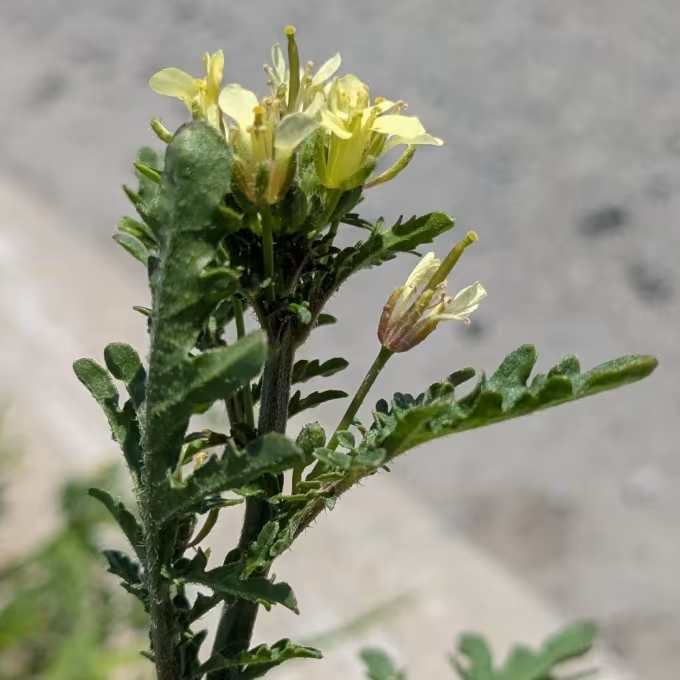
Description
Sowing dates
Erucastrum gallicum, commonly known as common dog mustard, is an annual or biennial plant in the Brassicaceae family. It is recognized as a significant weed in various field crops, often germinating during the early spring months alongside cereal crops.
The plant has a flexible germination cycle, allowing it to sprout throughout the growing season if soil moisture is sufficient. This characteristic makes it a persistent competitor in managed agricultural ecosystems.
Seedlings typically emerge from the upper 2–3 cm of soil. For farmers, pre-planting tillage is a critical technique to stimulate germination of these seeds, followed by their mechanical destruction before the primary crop is sown.
Crop rotation is a vital management strategy. By alternating broad-leaved and narrow-leaved crops, the competitive environment for Erucastrum gallicum is altered, significantly reducing its density over time.
Managing the seed bank is essential, as seeds can remain viable for several years in the soil. Consistent monitoring and preventing the plant from reaching the seed-bearing stage are the most effective ways to control its population.
Growing requirements
This species thrives in fertile, well-drained soils. It exhibits a preference for loamy and sandy-loam textures, which allow for rapid root establishment and efficient nutrient uptake.
Erucastrum gallicum is a light-demanding plant, growing most vigorously in open spaces. It is highly competitive in areas with ample sunlight but struggles significantly under the dense canopy of a well-established crop.
It shows considerable tolerance to various climatic conditions, including early-season cold snaps. This resilience makes it a hardy weed that can establish itself before many crop species have fully germinated.
While the plant adapts to a wide range of soil pH levels, it performs optimally on neutral to slightly alkaline soils. Soil nutrient availability, particularly nitrogen, directly influences the growth rate and competitiveness of the plant.
Adequate moisture is important during the initial stages of growth. While the plant can tolerate short periods of dry conditions, its development is most rapid when water is readily available in the upper soil layers.
Main diseases and pests
As a member of the Brassicaceae family, it is highly susceptible to cruciferous flea beetles, which can cause severe damage to the plant. These pests often migrate from weeds to adjacent crop fields.
The plant serves as a host for various aphid species, which can act as vectors for several viral diseases in agricultural crops. Consequently, it creates a potential biological reservoir for diseases during the off-season.
Fungal pathogens such as powdery mildew and various types of rots can affect this species. While the plant itself is resilient, it can act as a bridge for these pathogens to infect neighboring crops.
Root-knot nematodes and other soil-borne pathogens can impact the plant's health. Managing these populations through field sanitation helps reduce the risk of infestation across the entire crop area.
An integrated pest management approach, including regular inspections of field borders, is crucial. Eliminating the plant before it reaches the flowering stage helps disrupt the life cycle of many associated pests.
Harvesting
Mechanical control, such as weeding or hoeing, is most effective when performed during the rosette stage, before the plant develops vertical stems. This prevents the plant from flowering and releasing seeds.
Herbicidal control should target the plant at its earliest growth phases. Using systemic herbicides that are effective against broad-leaved weeds is recommended for successful management in conventional agricultural systems.
Sanitation of harvesting machinery is a critical step in preventing the spread of seeds between fields. Ensuring that equipment is cleaned before moving from a highly infested area to a cleaner one is a standard preventive measure.
For research or specialized uses, the plant may be harvested at full maturity. However, caution is necessary as the seed pods can be brittle and shatter easily upon harvest, potentially increasing the seed bank.
Post-harvest tillage, including deep plowing, is recommended to bury seeds to a depth that prevents germination in the next season. This practice is essential for long-term population control in agricultural fields.