
Eriosema montanum
Eriosema montanum
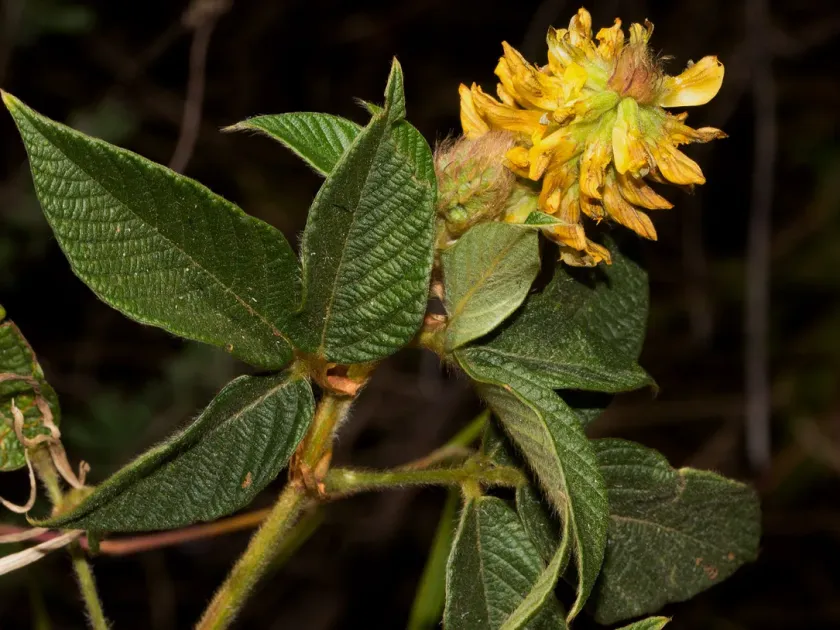
Description
Sowing dates
Eriosema montanum is a perennial herbaceous plant belonging to the Fabaceae family. Primarily found in mountain regions of Africa, this species has adapted to challenging environmental conditions, showcasing resilience in nutrient-poor soils and high-altitude habitats.
The plant exhibits a robust root system, often featuring rhizomes that allow for effective regeneration even under grazing pressure. The stems, which can be either erect or prostrate, are covered with fine trichomes, serving as an evolutionary adaptation to minimize transpiration.
Leaves are typically trifoliate with a distinct texture, supporting efficient photosynthetic activity under varying light conditions. The yellow, pea-like flowers are clustered in racemes and play a significant role in supporting local pollinator populations, which contributes to overall biodiversity.
Seeds are produced in dehiscent pods, ensuring a natural propagation cycle in its native range. Being a member of the legume family, Eriosema montanum participates in nitrogen fixation through symbiosis with Rhizobium bacteria, enriching the soil with essential nutrients.
In terms of agricultural utility, this species is highly regarded as a potential forage crop for livestock grazing in tropical and subtropical highlands. It offers a sustainable solution for restoring degraded grasslands due to its hardiness and nitrogen-fixing capabilities.
Growing requirements
Eriosema montanum thrives in well-drained soils, which are critical for preventing root rot and supporting the health of its symbiotic nitrogen-fixing bacteria. Loamy or sandy soil types with slightly acidic to neutral pH levels provide the best growth medium.
The plant requires adequate sunlight to reach its maximum biomass potential. While it can survive in partial shade, prolonged lack of solar radiation negatively affects the density of its foliage and the overall quality of the forage it produces.
Climate adaptability is one of the key features of this crop; it is well-suited to regions with significant diurnal temperature fluctuations. However, it is sensitive to severe, prolonged frosts, which can damage the vegetative parts of the plant and interrupt its growth cycle.
Water management is vital; while the plant is moderately drought-tolerant, it requires consistent moisture during the active growth phase to develop a strong root system. In agricultural settings, ensuring proper field drainage is essential to avoid waterlogged conditions.
In terms of soil fertility, the plant is relatively undemanding compared to cereal crops. Nevertheless, the application of phosphorus-based fertilizers can significantly boost yield and promote better development of the root nodules, enhancing the plant's overall productivity.
Main diseases and pests
Fungal diseases, such as leaf spot and powdery mildew, are the primary threats during high-humidity periods. These pathogens can significantly reduce the photosynthetic surface area, leading to lower biomass yield and decreased nutritional value.
Insect pests, including various aphids and weevils, often target the tender shoots and flower buds of the plant. Integrated pest management strategies, such as crop rotation and encouraging natural predators, are recommended to control these populations without excessive chemical use.
Weed competition is a major challenge during the plant's early establishment phase. Because Eriosema montanum exhibits a slow initial growth rate, it is crucial to keep the field free of invasive grasses and broadleaf weeds until the crop matures.
Root rot caused by stagnant water is a serious concern. If the soil drainage is poor, the plant becomes highly susceptible to various soil-borne pathogens that can destroy the root system and kill the plant in a relatively short period.
Overgrazing poses a significant long-term risk to pasture productivity. Proper management, including rotational grazing and giving the plants sufficient time to recover, is necessary to maintain the health and longevity of the crop in grazing systems.
Harvesting
Harvesting Eriosema montanum for forage is typically performed before the peak seed-set stage to ensure the highest protein content in the foliage. Mowing techniques must be calibrated to leave enough stubble for plant regeneration.
When intended for seed production, the pods should be monitored carefully as they tend to shatter when fully dry. Harvesting should take place when the majority of the pods have changed color but before they spontaneously open, minimizing potential yield losses.
Post-harvest management involves drying the biomass under shade to retain its nutritional value, especially the delicate protein content found in the leaves. Proper storage in a dry, ventilated area prevents the development of mold, which could be toxic to livestock.
The frequency of harvesting depends heavily on the local environmental conditions and the intensity of the growing season. In optimal climates, multiple cuttings per year may be possible, provided the plant is given sufficient recovery periods between harvests.
Future agricultural practices are currently investigating mechanical harvesting methods to improve the efficiency of utilizing this legume. Developing standardized protocols for its harvest will be key to its adoption in larger-scale agricultural systems.