
Eriosema glomeratum
Eriosema glomeratum
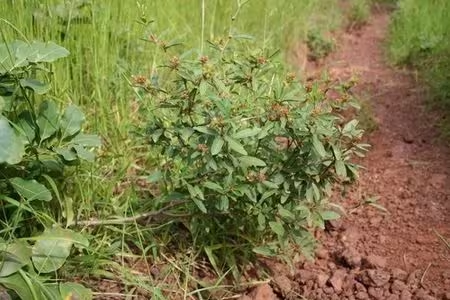
Description
Sowing dates
Sowing Eriosema glomeratum is best timed at the onset of the rainy season when soil temperatures remain consistently favorable. Proper timing is essential to ensure that the seedling establishes a resilient root system before any potential dry spells.
The optimal planting depth is approximately 2 to 3 centimeters. Uniform seed distribution with row spacing of 40-60 centimeters is recommended to balance plant density and minimize competition for soil nutrients and light during the initial growth phase.
Scarification of seeds is highly recommended prior to planting due to the hard seed coat, which naturally delays germination. This simple physical treatment can significantly improve emergence rates and ensure a more synchronized crop start.
Inoculation with compatible Rhizobium strains is crucial for successful establishment. This biological process ensures that the plant begins fixing nitrogen efficiently, which promotes vigorous vegetative growth and improves the overall quality of the soil.
Early-stage weed management is a critical factor for success. Because the plant exhibits a slow growth rate in its infancy, hand-weeding or light mechanical cultivation between rows is recommended until the canopy closes.
Growing requirements
As a member of the Fabaceae family, Eriosema glomeratum is highly valued for its role in soil enrichment through atmospheric nitrogen fixation. It is well-adapted to savanna ecosystems and open tropical habitats where moisture levels fluctuate.
The species prefers well-drained, sandy-loam soils. It is sensitive to waterlogging, so field selection should focus on areas with good natural or artificial drainage to prevent fungal complications in the root zone.
Eriosema glomeratum performs best in temperatures ranging from 22 to 30 degrees Celsius. It exhibits strong tolerance to full solar exposure, making it an excellent candidate for cultivation in open, sunlit fields where other crops might suffer from heat stress.
While the plant is relatively drought-tolerant once established, it requires sufficient precipitation during the peak vegetative period to maximize biomass production. Irrigation may be beneficial in areas with erratic rainfall.
Soil fertility management should focus on phosphorus and potassium levels, as these minerals support root development and nodule activity. Nitrogen application is usually unnecessary, as the plant's symbiotic relationship with bacteria provides sufficient amounts.
Main diseases and pests
Root rot is the primary disease threat, particularly in poorly drained soils where stagnant water promotes pathogen proliferation. Ensuring proper soil aeration is the most effective preventative measure against this physiological and biological challenge.
Insect pests, including various aphids and weevils, can infest the foliage and reproductive structures during active growth phases. Regular monitoring is essential to catch early infestations and implement targeted control measures.
Viral infections, often transmitted by insect vectors, can stunt plant growth and reduce yield potential. Utilizing healthy seeds and maintaining appropriate distance from infected areas can help mitigate the spread of these pathogens.
Integrated pest management (IPM) strategies are recommended to maintain field health without excessive reliance on chemical agents. Encouraging natural predators of common pests can provide a sustainable way to manage population spikes.
Seed-borne diseases should be addressed through careful selection of the planting material. Ensuring that all seeds are sourced from vigorous, healthy plants and subjecting them to proper storage conditions is vital for long-term farm productivity.